



Formstifte und Buchsen: Wie man die Ausrichtung verbessert und den Verschleiß reduziert
Mold pins and bushings improve mold alignment by guiding mold halves into accurate position during every cycle. Choosing the correct fit, Materialhärte, and maintenance schedule reduces friction, prevents uneven wear, and lowers downtime risk. Hardened and coated guide systems usually last longer in high-volume production, while regular lubrication and early replacement planning help maintain part quality and mold lifespan.
Poor mold alignment rarely starts with a major failure. Most problems begin with small wear marks, uneven movement, or excess clearance inside the guide system. Im Laufe der Zeit, those issues can lead to flashing, scoring, and costly downtime. Choosing the right mold pins and bushings setup helps prevent those problems early, especially in high-cycle production where even small alignment errors add up fast.
What do mold pins and bushings do in injection molds?
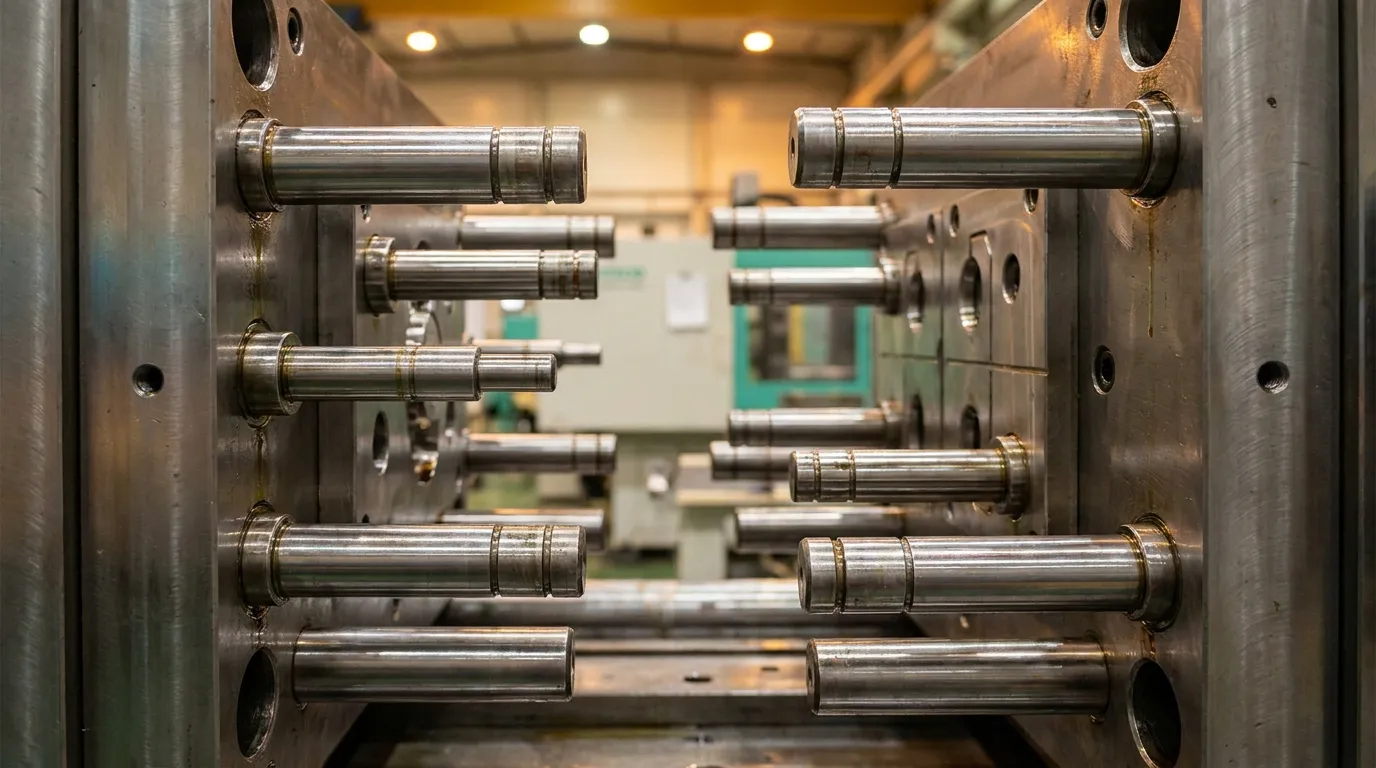
Mold pins and bushings keep mold halves aligned during every production cycle. Proper alignment reduces uneven wear, prevents flashing and binding, and helps maintain dimensional consistency over long production runs.
Leitstifte, often called leader pins, guide the moving and stationary mold halves into the correct position during mold closing. Bushings act as the matching contact surface that supports smooth movement and controls friction. Laut Kunststofftechnologie, accurate alignment helps protect critical mold surfaces from premature wear.
Ohne richtige Ausrichtung, pressure shifts unevenly across the mold. That increases stress on cavities, Rutschen, Ejektorsysteme, and shut-off surfaces. Even a small amount of misalignment can create flashing or dimensional variation in molded parts.
| Komponente | Hauptfunktion | Häufiges Problem, wenn es getragen wird |
|---|---|---|
| Leitnadel | Ausrichtung der Formhälften | Bindung oder Schwingung |
| Führungsbuchsen | Verringert die Reibung | Ungleichmäßiger Verschleiß |
| Schmierrille | Sorgt für eine sanfte Bewegung | Wärmeaufbau |
| Retainer-System | Hält Bauteile sicher | Ausrichtungsdrift |
For molds running high production volumes, guide systems directly affect service life. Well-fitted Führungsstiftsysteme help reduce impact loading during repeated opening and closing cycles.
If you're comparing broader mold components, die Vollständiger Leitfaden für Formkomponenten explains how guide systems interact with cooling, Auswurf, und Hohlraumdesign.
How do you choose the right pin and bushing fit?
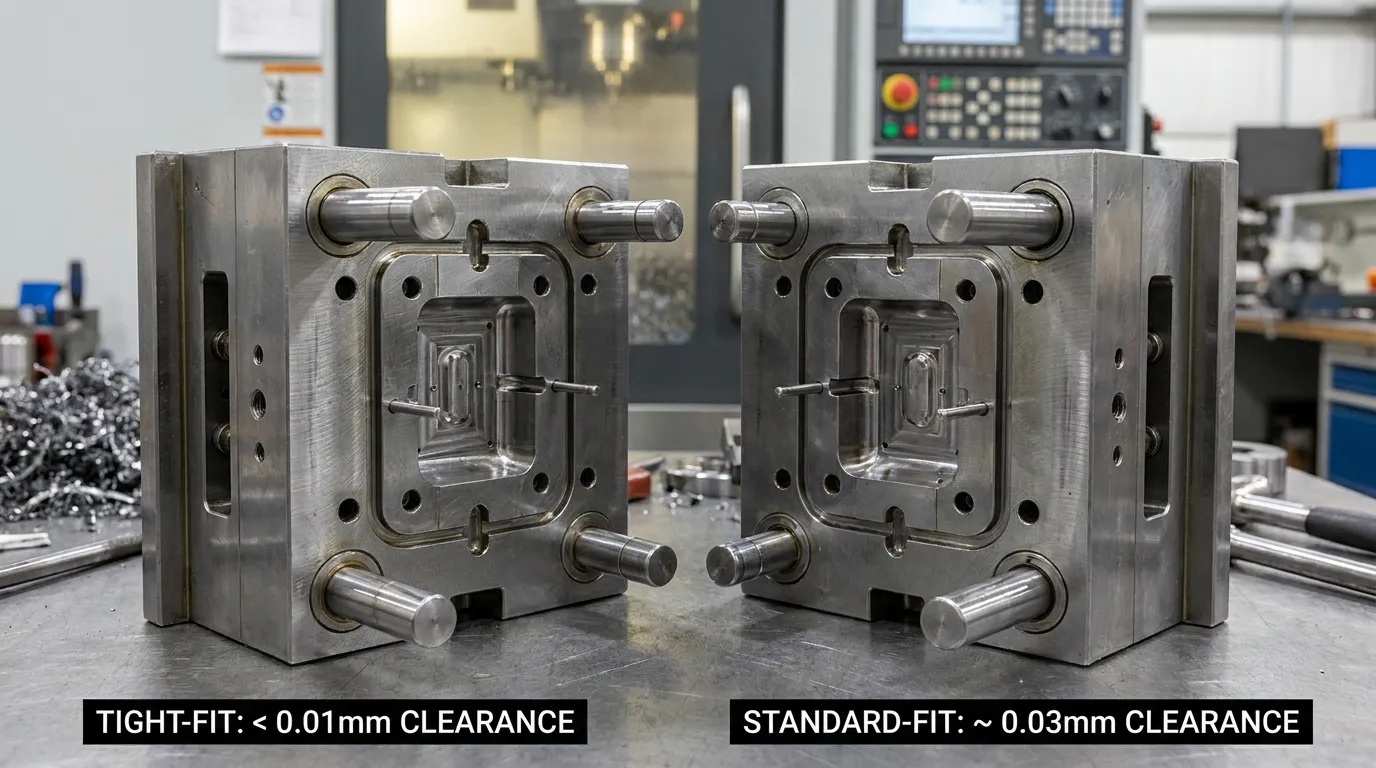
The correct pin-bushing fit balances alignment precision with smooth movement. Tight fits improve accuracy but increase seizure risk if lubrication or thermal expansion is not controlled.
The best fit depends on production speed, Betriebstemperatur, and mold tolerance requirements. High-precision molds often use tighter clearances to improve positioning accuracy. Standard production molds usually need slightly more clearance to reduce friction and support easier maintenance.
Very tight fits are not always the best choice. They work well in controlled environments with stable temperatures, but they can create sticking problems during long production runs. Medical molds with tight tolerances sometimes experience binding when thermal expansion changes the pin-to-bushing clearance after several hours of operation.
Tight-fit- vs. Standard-Fitt-Führungssysteme
| Passformtyp | Beste Nutzung | Vorteile | Risiken |
|---|---|---|---|
| Eng sitzen | Medizinische und Präzisionsformen | Bessere Ausrichtungsgenauigkeit | Erhöhtes Anfallsrisiko |
| Standardpassform | Formen in der allgemeinen Produktion | Einfachere Schmierung und Wartung | Etwas geringere Positionsgenauigkeit |
| Lockerer Sitz | Prototypen- oder Low-Cycle-Formen | Geringere Reibung | Schnellerer Verschleiß und Vibration |
A practical way to compare systems is by expected cycle count. An automotive mold running one million cycles annually places far more stress on guide surfaces than a low-volume prototype mold. High-cycle molds benefit from tighter machining tolerances and better surface treatments.
Laut Erste Form, guide systems improve positioning accuracy and support stable mold operation. Buyers comparing systems should also evaluate surface finish quality and lubrication access, not just dimensional tolerance alone.
When evaluating precision requirements, Präzisionsformtoleranzen also influence how tightly guide systems should be matched to the mold design.
Pin-to-Bushing-Auswahltabelle
| Produktionsvolumen | Empfohlene Freigabe | Schmierbedarf | Verschleißrisiko | Beste Anwendung |
|---|---|---|---|---|
| Geringes Volumen | Etwas locker | Moderat | Niedrig | Prototypformen |
| Mittleres Volumen | Standardpassform | Regulär | Medium | Konsumgüter |
| Großes Volumen | Präzise Passform | Hoch | Hoch, wenn vernachlässigt | Automobilformen |
| Ultra-Präzision | Eng kontrollierter Anschluss | Strenge Wartung | Moderat | Medizin und Elektronik |
Which materials and surface treatments reduce wear?
Hardened tool steels with nitriding or surface coatings typically deliver better wear resistance and lower friction than untreated components. Material selection should match cycle count, mold speed, and lubrication conditions.
Most guide pins and bushings use hardened tool steel because it maintains dimensional stability under repeated movement. Harder materials resist scoring better, especially in molds that run continuously across long production shifts.
Surface treatment also matters. Nitriding creates a hardened outer layer that improves wear resistance without significantly changing the component size. Some manufacturers also use PVD coatings to lower friction and reduce surface damage during high-speed operation.
Premium coatings are not necessary for every mold. Standard hardened systems often perform well in low-cycle molds where lubrication and contamination control are properly managed. Buyers sometimes overspend on advanced coatings when maintenance practices are the real source of wear problems.
| Material oder Behandlung | Hauptvorteil | Beste Nutzung |
|---|---|---|
| Gehärteter Werkzeugstahl | Allgemeiner Verschleißwiderstand | Standardproduktion |
| Nitridierter Stahl | Verbesserte Oberflächenhärte | Hochzyklische Formen |
| PVD-Beschichtung | Geringere Reibung | Hochgeschwindigkeitsbetrieb |
| Polierte Oberfläche | Sanftere Bewegung | Präzisionsformen |
A real production example shows why material choice matters. One automotive supplier replaced untreated bushings twice as often as nitrided components in a mold producing more than one million cycles per year. The nitrided setup reduced maintenance downtime and improved alignment consistency.
Die Gehärtete Formkomponenten used in other precision mold systems often follow the same wear-resistance principles as guide assemblies. Sunshine's engineering discussion on advanced mold materials also highlights how coatings and hardened surfaces improve long-term durability in demanding production environments.
What causes guide pin and bushing wear?
Guide system wear usually starts with poor alignment, unzureichende Schmierung, or contamination inside the mold. Early wear signs include scoring, uneven polishing, vibration, and increased mold resistance during closing.
Most guide systems fail gradually, not suddenly. Small particles, dry movement, or uneven loading slowly damage the contact surfaces between the pin and bushing. As wear increases, alignment accuracy drops and mold movement becomes less stable.
Poor alignment is one of the biggest causes of premature wear. According to Sunshine's article on punch breakage in stamping dies, uneven loading and misalignment increase stress across tooling surfaces. Similar problems occur in injection molds when guide systems no longer close evenly.
Warnschilder sollten Betreiber nicht ignorieren
- Wertungsmarken auf Führungsoberflächen
- Erhöhte Vibration beim Schließen der Form
- Blitzdefekte in der Nähe von Trennlinien
- Ungleichmäßige Polierungsmuster
- Rauschen während der Öffnungs- und Schließungszyklen
- Übermäßige Hitze in der Nähe der Führungsstellen
Lubrication problems also accelerate wear. Dry surfaces create friction that increases operating temperature and damages hardened layers. Contamination from plastic residue or metal particles can make the problem worse by scratching contact surfaces during each cycle.
An electronics mold producing thin-wall components showed flashing problems after uneven guide pin wear shifted alignment slightly during operation. The mold still closed fully, but part consistency changed enough to increase rejection rates.
If you are already seeing related friction problems elsewhere in the tool, Schimmelverschleißprobleme inside ejector systems may point to broader maintenance gaps.
When should mold pins and bushings be replaced?
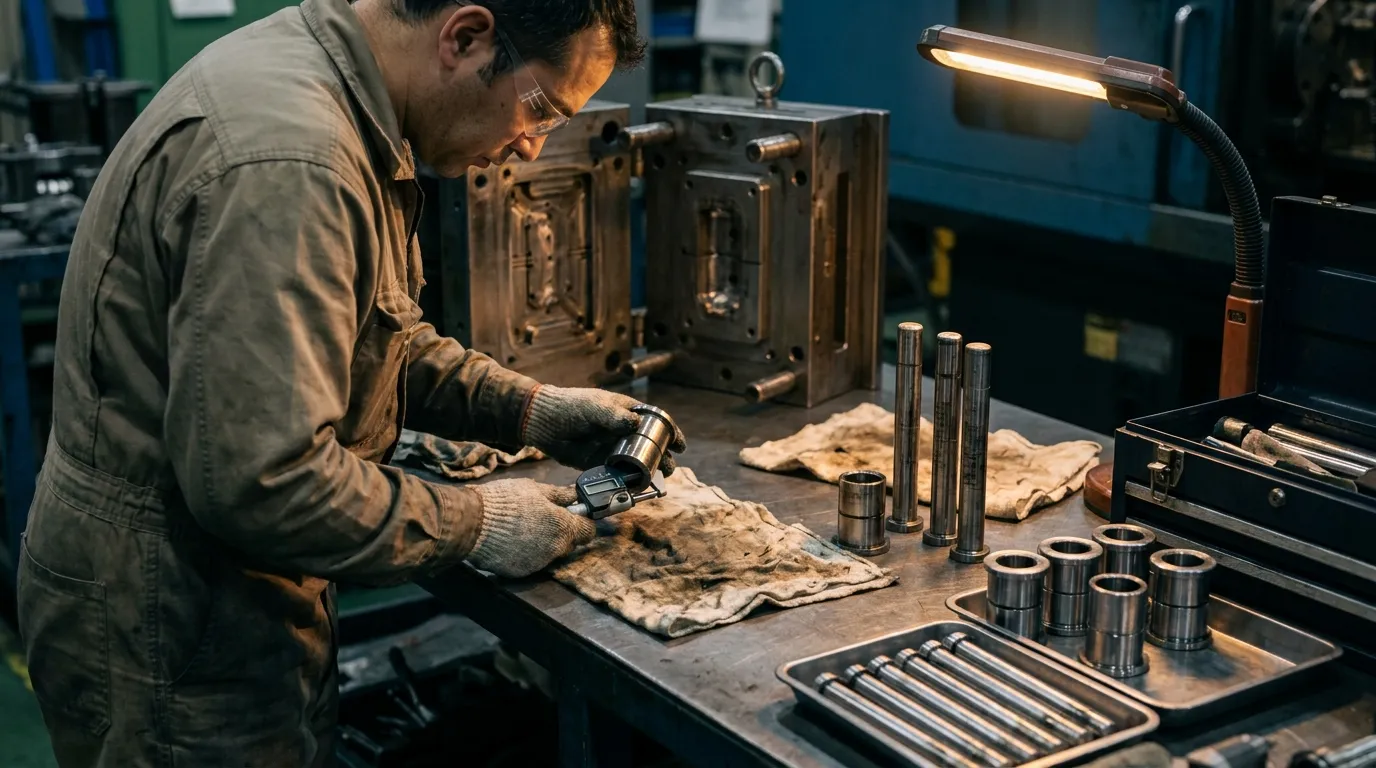
Mold pins and bushings should be replaced before alignment loss affects part quality. Waiting until severe scoring or looseness appears often increases repair costs and production downtime.
Replacement timing depends on cycle count, Produktionsgeschwindigkeit, und Betriebsbedingungen. Some molds can run for years with minimal wear, while high-speed automotive tools may require regular guide system inspections every few months.
A common mistake is waiting for obvious damage before replacing components. By the time severe looseness appears, uneven loading may already have damaged cavities, Rutschen, or shut-off surfaces. Replacing guide systems early usually costs less than repairing multiple mold components later.
Checkliste für die Verschleißkontrolle des Leitsystems
| Inspektionspunkt | Worauf man achten sollte | Empfohlene Maßnahmen |
|---|---|---|
| Oberflächenfinish | Punktewertung oder Kratzer | Polieren oder ersetzen |
| Freigabe | Übermäßige Bewegung | Messtoleranz |
| Schmierung | Trockenes oder kontaminiertes Fett | Reinigen und nachspülen |
| Lärm | Vibrations- oder Aufprallgeräusche | Ausrichtung inspizieren |
| Profilteile | Flash oder Mismatch | Prüfen Sie den Führungsverschleiß |
A maintenance team comparing replacement timing found that planned guide system replacement during scheduled downtime cost far less than emergency repair after alignment failure stopped production unexpectedly.
Regular inspection also helps identify lubrication issues early. For molds running continuous production, preventive checks are usually more effective than reacting after visible defects appear. Proper Wartung der Führungsbuchse helps extend service life and reduce unplanned shutdowns.
How should maintenance and lubrication be planned?
Preventive maintenance is the easiest way to extend guide system life. Consistent lubrication and routine inspections reduce friction, stabilize movement, and help prevent uneven wear before it affects mold accuracy.
Maintenance schedules should match production volume. High-cycle molds often need more frequent lubrication checks because heat and repeated movement gradually break down grease performance. Lower-volume molds usually require less aggressive maintenance intervals.
Wartungscheckliste
- Führoberflächen während der geplanten Schimmelwartung reinigen
- Check for scoring, discoloration, or uneven wear
- Entfernen Sie kontaminiertes Schmiermittel, bevor Sie Fett erneut auftragen
- Stellen Sie sicher, dass der Abstand zwischen Stift und Buchse innerhalb der Vorgaben bleibt
- Inspizieren Sie die Montagebeschläge auf Bewegung oder Lockerung
- Store spare components in clean, dry conditions
Lubrication quality matters as much as lubrication frequency. Too little grease increases friction, but excessive lubrication can trap contaminants inside the guide system. Consistent cleaning is often more important than using expensive lubricant types.
For broader maintenance planning, die Pflege von Formkomponenten process should include regular inspection across the entire mold assembly, not only the guide system.
Which guide system works best for your production environment?
The best guide system depends on production volume, Präzisionsanforderungen, und Betriebsbedingungen. A setup that works well for low-volume consumer products may wear out quickly in high-speed automotive production.
Automotive molds usually need hardened pins, nitrided bushings, and tighter machining tolerances because they run continuously under heavy cycle counts. Medical and electronics molds often prioritize positioning accuracy over maximum wear resistance because small dimensional shifts can affect part quality.
| Produktionsumgebung | Empfohlenes Setup | Hauptpriorität |
|---|---|---|
| Automobil | Gehärtetes, nitridiertes System | Langlebigkeit mit langer Lebensdauer |
| Medizinische Medizin | Präzisions-Tight-Fit-System | Ausrichtungsgenauigkeit |
| Konsumgüter | Standardgehärtetes System | Ausgewogene Kosten |
| Prototypformen | Standard-Fit-Führungssystem | Einfachere Wartung |
High-end coatings are not always necessary. In cleaner production environments with stable temperatures, standard hardened systems often perform reliably for long periods. Andererseits, molds exposed to contamination or very high speeds usually benefit from advanced surface treatments.
One medical mold experienced sticking because the guide fit was too tight for long production runs at elevated temperatures. Switching to a slightly larger clearance improved movement consistency without reducing part quality.
Different industries place different demands on guide systems. Die Anforderungen an die Schimmelanwendung across automotive, Medizin, and electronics production help explain why guide system selection should match the operating environment, not just the initial component cost.
Den nächsten Schritt richtig machen
Choosing the right mold pins and bushings setup comes down to balance. Tight tolerances improve alignment, but they also increase maintenance demands. Hardened and coated systems extend wear life, but only when lubrication and inspection routines stay consistent.
Before ordering replacement components, review your production volume, Betriebstemperatur, and downtime history. Small alignment problems often become expensive repair issues if guide wear goes unchecked. A planned maintenance strategy usually delivers better long-term performance than simply replacing parts after failure.
Häufig gestellte Fragen
What are mold pins and bushings used for?
Mold pins and bushings guide mold halves into accurate alignment during opening and closing cycles. They reduce uneven wear, Verbesserung der Positionsgenauigkeit, and help prevent flashing or binding problems in injection molds.
How do guide bushings reduce mold wear?
Guide bushings reduce direct friction between moving mold components and distribute alignment forces more evenly. Properly fitted bushings also help prevent metal-to-metal damage and vibration during production cycles.
When should guide pins be replaced?
Guide pins should be replaced when scoring, looseness, or alignment variation becomes visible during inspection. Delaying replacement can increase mold damage and create longer production downtime.
What materials are best for mold guide systems?
Hardened tool steel is commonly used because it provides strong wear resistance and dimensional stability. Nitriding and surface coatings can further improve service life in high-cycle molds.
How tight should guide pin clearance be?
Guide pin clearance should balance alignment accuracy with smooth movement during thermal expansion. Extremely tight fits may increase seizure risk if lubrication is not properly controlled.
Can poor alignment damage mold components?
Ja. Poor alignment increases uneven loading across mold components and may cause flashing, scoring, punch failure, oder vorzeitigen Verschleiß. Even small alignment errors can shorten overall mold lifespan.
Teilen:



Geschrieben von Sunshine
Bei Sunshine, Wir sind ein professioneller Hersteller und Lieferant von Präzisionsformkomponenten, bietet ein breites Produktsortiment für Stange- und Spritzgussanwendungen. Unser Kernfokus liegt auf dem Stanzen von Stempeln, Auswurfstifte und -hülsen, sowie Führungspfosten und Buchsen. Mit fortschrittlicher CNC-Bearbeitung, Strenge Qualitätskontrolle, und starke Produktionskapazitäten, Wir sorgen für Zuverlässigkeit, Hochpräzisionsteile, zusammen mit vorrätigen Standardkomponenten für schnelle und effiziente weltweite Versorgung.
NACHRICHTEN
EMPFANG SERVICE
Mit hochwertigen Teilen für jedes Budget und freundlichem Personal, das geschult ist, um Ihren Besuch informativ und unkompliziert zu gestalten.
