



Präzisionsformteile: Toleranz, Stahl, Ziel, und QC-Checkliste
Precision mold parts must balance tolerance capability, Stahlqualität, Oberflächenoberfläche, and inspection quality to maintain stable injection molding performance. Buyers should compare suppliers using measurable QC processes, Materialrückverfolgbarkeit, dimensional inspection methods, and realistic lead-time expectations instead of relying only on low pricing or “high precision” marketing claims.
A mold can look well-machined and still fail during production because of poor tolerance control, incorrect steel selection, or weak inspection procedures. Small dimensional problems often create flash, part sticking, inkonsistente Schrumpfung, or early wear. This guide explains how engineers and buyers can compare precision mold parts using practical standards instead of supplier claims alone.
What are precision mold parts and why do they matter in injection molding?
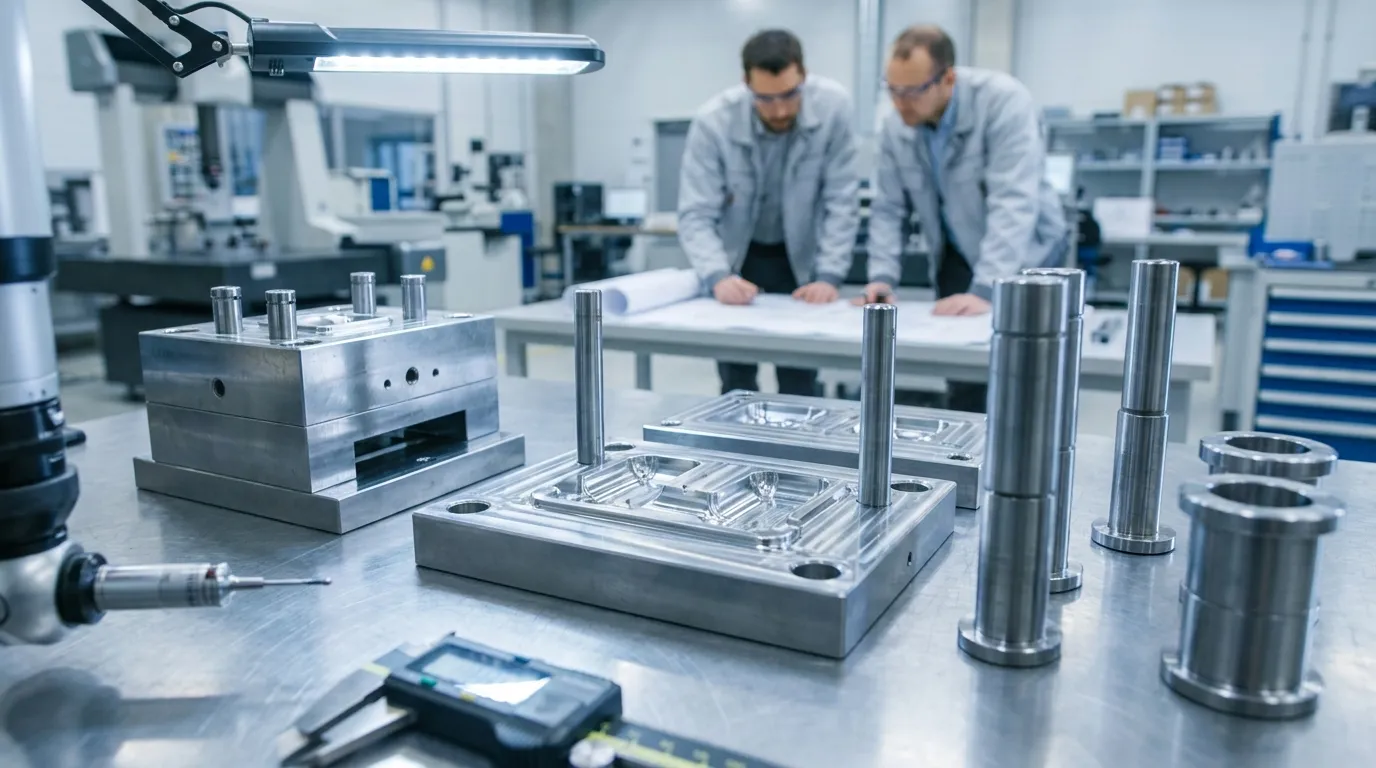
Precision mold parts are high-accuracy mold components such as cores, Karies, Ejektoren, and inserts manufactured to tight tolerances. Their dimensional consistency directly affects molded part accuracy, Zyklusstabilität, Verschleißfestigkeit, and long-term production reliability.
Precision mold parts are the components inside a mold that directly control part geometry, movement, and alignment. These parts include mold inserts, Sliders, Auswurfstifte, Führungsbuchsen, Farben, und Karies. Even small dimensional errors can affect the molded product after thousands of production cycles.
Zum Beispiel, a cavity insert with slight dimensional drift may create flash on a medical housing or cause uneven shrinkage in a packaging component. That problem usually becomes more expensive after production begins because downtime, rework, and scrap costs increase quickly.
Viele Käufer beginnen mit einem breiten Leitfaden für Formkomponenten to understand how mold systems work together before comparing individual precision components.
| Präzisionskomponente | Hauptfunktion | Risiko, wenn die Toleranz versagt |
|---|---|---|
| Kern-Einsatz | Forminterne Geometrie | Dimensionsunübereinstimmung |
| Karieseinsatz | Form der äußeren Form | Flash- oder kosmetische Defekte |
| Auswurfbolzen | Entfernen des geformten Teils | Haft- oder Stiftspuren |
| Führungsbuchsen | Bewahrt die Ausrichtung | Formverschleiß und Instabilität |
| Slider | Erstellt Nebenfunktionen | Leckage oder Teilverformung |
Käufer vergleichen Überblick über Kunststoffformteile pages should focus less on catalog variety and more on measurable process capability, inspection control, and steel traceability.
What tolerance range is realistic for precision mold parts?
Precision mold parts commonly operate within micron-level tolerances, but tighter specifications increase machining, Inspektion, and rejection costs. Not every mold component requires ultra-tight control, so tolerance should match the molding function and production risk.
Many suppliers advertise “high precision” without defining actual tolerance capability. In der Praxis, required tolerance depends on the component’s role inside the mold. A cavity insert handling cosmetic alignment needs tighter control than a support plate or non-critical mounting feature.
Ultra-tight tolerance is not always the best choice. Some mold components perform reliably with wider tolerances that reduce machining cost and inspection delays. Over-specifying every dimension often increases lead time without improving molding results.
Which mold components require the tightest tolerances?
Critical sealing surfaces, shut-off areas, cavity inserts, and alignment components usually require the highest precision. These areas directly affect molded part quality and mold movement.
Support structures and non-contact surfaces often allow wider tolerances without affecting production stability.
| Bauteiltyp | Typische Präzisionsanforderung | Warum es wichtig ist |
|---|---|---|
| Karieseinsatz | Very high | Kontrolliert geformte Abmessungen |
| Absperrfläche | Very high | Verhindert Blitze |
| Führungskomponenten | Hoch | Bewahrt die Ausrichtung |
| Auswurfsystem | Moderat | Unterstützt Smooth Release |
| Stützplatten | Lower | Begrenzter Profilwirkung |
A packaging mold project may require tight cavity tolerance control to prevent flash around thin walls, while surrounding support plates can use wider tolerance ranges. One buyer reduced machining cost significantly after relaxing unnecessary tolerances on non-critical support components.
Ingenieure vergleichen Präzisionsformkomponenten should ask suppliers which dimensions receive full inspection instead of assuming every surface receives the same level of control.
Which steel grade should buyers choose for precision mold parts?
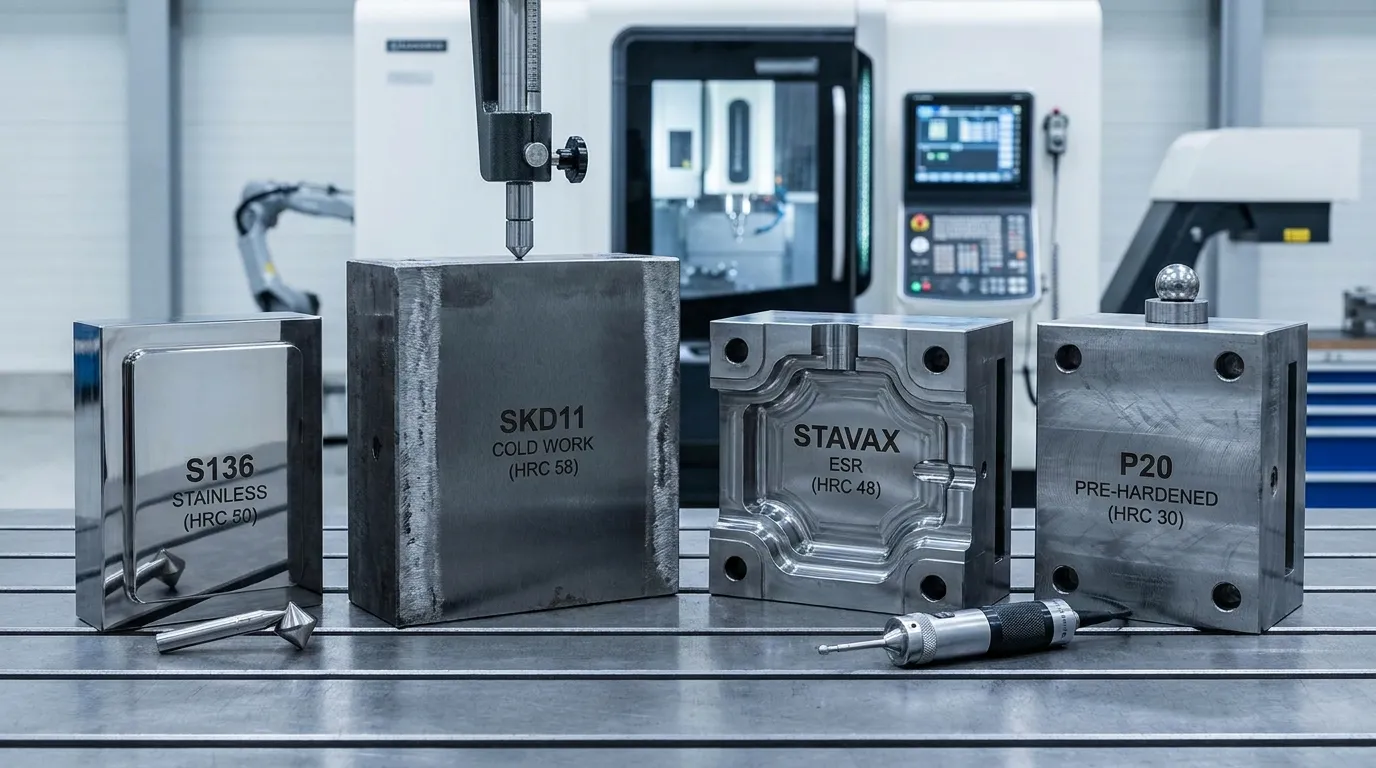
Mold steel selection depends on production volume, Harztyp, Korrosionsexposition, und Verschleißbedingungen. Harder steel is not automatically better because machining difficulty, brittleness, polishability, and maintenance requirements also affect long-term tooling performance.
Steel selection changes mold lifespan, polish quality, Wartungsintervalle, and repair difficulty. Buyers often compare popular grades like S136, SKD11, STAVAX, and P20, but the best option depends on production conditions rather than brand familiarity alone.
Harder mold steel is not automatically better. Extremely hard steel can increase brittleness, polishing difficulty, and repair complexity in high-maintenance molds. Some high-volume molds actually perform better with balanced hardness and easier maintenance access.
When is stainless mold steel worth the added cost?
Stainless grades such as S136 or STAVAX work well in corrosive environments, medical molding, and humid production conditions. They also support polished cosmetic surfaces more effectively than some general-purpose steels.
A medical mold insert exposed to moisture and aggressive cleaning chemicals may fail early with standard tool steel. Stainless mold steel often prevents corrosion damage and extends maintenance intervals in those environments.
Auswahltabelle für Präzisionsformstahl
| Stahlqualität | Hauptvorteil | Bester Anwendungsfall | Relativer Verschleißwiderstand | Wartungshinweise |
|---|---|---|---|---|
| P20 | Einfache Bearbeitung | Formen in der allgemeinen Produktion | Moderat | Leichter zu reparieren |
| SKD11 | Starke Verschleißfestigkeit | Anwendungen von abrasiven Harzen | Hoch | Härteres Polieren |
| S136 | Korrosionsbeständigkeit | Medizinische und kosmetische Formen | Hoch | Gut für ein poliertes Finish |
| STAVAX | Hohe Polierbarkeit | Optische oder transparente Bauteile | Hoch | Höhere Materialkosten |
Viele Käufer recherchieren Formkomponentenmaterialien focus only on hardness values. Verschleißfestigkeit, Korrosionsexposition, Polnische Anforderungen, and repair access usually matter just as much during long production runs.
How does surface finish affect mold performance and part quality?
Surface finish affects part appearance, release behavior, Verschleißfestigkeit, and cleaning requirements. A mirror finish improves cosmetic clarity for some applications, but many industrial molds perform better with practical finishes that reduce maintenance and machining cost.
Surface finish changes more than appearance. It affects mold release, Reibung, cleaning cycles, resin flow, und Verschleißverhalten. Cosmetic consumer products often require polished cavity surfaces, while industrial parts may perform better with controlled texture or practical machining finishes.
Mirror-polished surfaces are often overused. Many industrial molding applications achieve better long-term performance with practical finishes that reduce maintenance and tooling cost. Highly polished surfaces can increase polishing time and future repair expense without improving the molded part.
| Finish-Typ | Gebräuchliche Nutzung | Hauptvorteil |
|---|---|---|
| Spiegelpolitur | Optische oder kosmetische Teile | Hohe visuelle Klarheit |
| Feiner Politur | Konsumgüter | Ausgewogenes Erscheinungsbild |
| EDM-Textur | Industrielle Komponenten | Besserer Griff und Release |
| Fräsende Oberfläche | Funktionale Werkzeugbereiche | Geringere Wartungskosten |
A cosmetic electronics housing may require mirror-polished cavity surfaces for visual clarity. A structural industrial part usually benefits more from stable release performance and lower maintenance requirements.
Käufer bewerten Spritzgusskomponenten should match finish quality to actual product requirements instead of automatically choosing the highest polish level.
How are precision mold parts inspected before approval?
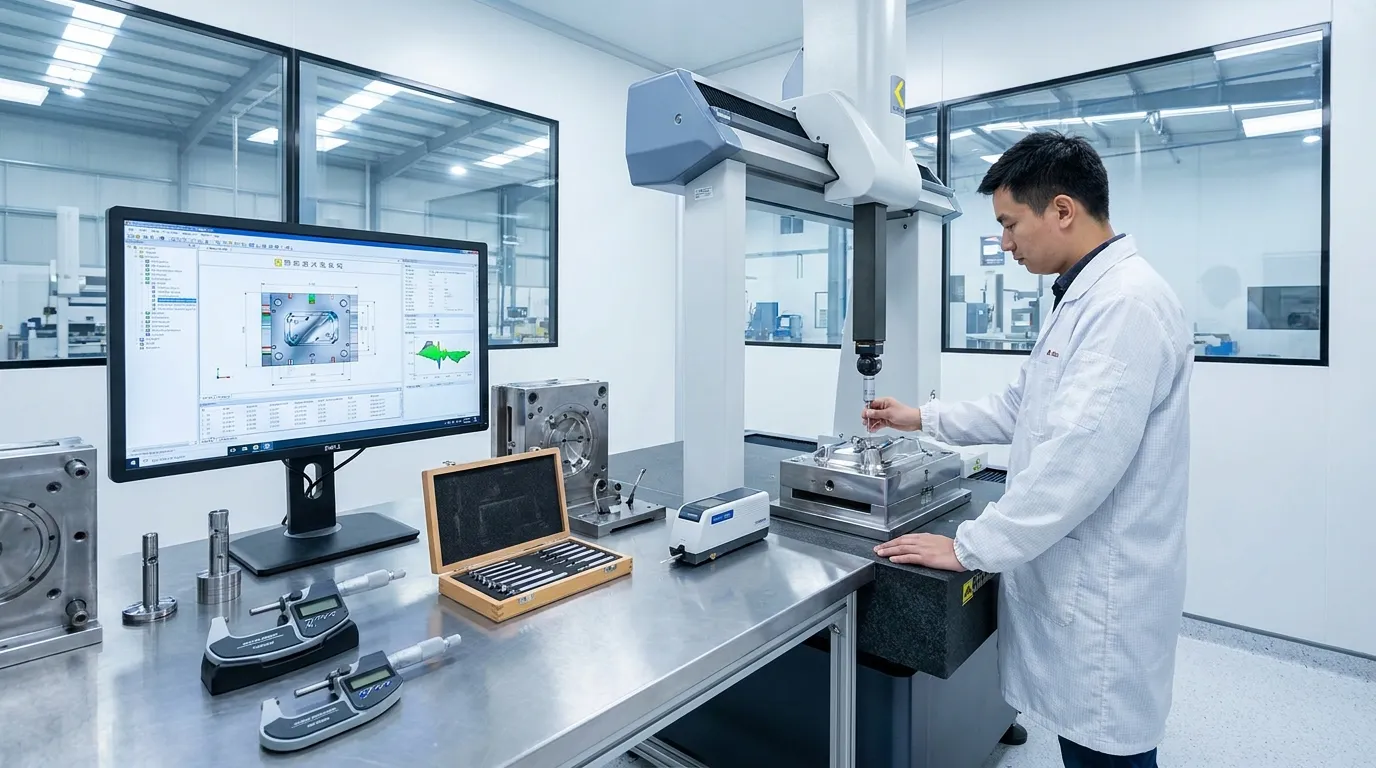
Precision mold part inspection should combine dimensional measurement, Härteverifikation, surface evaluation, and documented first article approval. Buyers should request measurable inspection data instead of relying only on supplier claims about precision capability.
A reliable inspection process starts before shipment. Suppliers should verify dimensions against engineering drawings, confirm material specifications, inspect surface finish quality, and document all critical measurements.
Many procurement teams reject suppliers because inspection reports lack measurable traceability. If a supplier cannot explain how dimensions were verified, future production consistency becomes difficult to trust.
Which inspection tools matter most?
Coordinate Measuring Machines (CMMs) remain one of the most important inspection tools for complex mold geometry. Micrometers, hardness testers, pin gauges, and surface roughness instruments also support dimensional verification.
| Inspektionswerkzeug | Hauptzweck |
|---|---|
| CMM | Komplexdimensionale Messung |
| Mikrometer | Externe Präzisionsmessung |
| Pin-Spur | Lochverifikation |
| Härtetester | Stahlhärtevalidierung |
| Oberflächenrauheitsprüfer | Prüfprüfung der Oberflächenqualität |
A supplier should also provide first article inspection records before approval. This documentation helps buyers compare measured dimensions against the original drawing package.
Checkliste für die Genehmigung der Qualitätskontrolle für Gussteile
- Überprüfung der Überprüfung der Konstruktionszeichnungsrevision
- Materialzertifizierung bestätigen
- Überprüfen Sie die Härtetestdaten
- Überprüfen Sie kritische Dimensionen mit CMM-Berichten
- Inspektion der Oberflächenqualität
- Überprüfen Sie Abschalt- und Abdichtungsflächen
- Überprüfung der Rückverfolgbarkeitsdokumentation
- Überprüfen Sie Verpackungsschutzmethoden
- Bestätigen Sie die Genauigkeit der Versandkennzeichnung
- Genehmigung des ersten Artikel-Inspektionsberichts
International trade documentation also affects approval timing. Die USA. International Trade Administration notes that incomplete compliance records can disrupt import timelines, especially for industrial manufacturing shipments.
Käufer, die die eines Lieferanten bewerten Präzisionsinspektionsverfahren should verify how inspection data is stored, reviewed, and linked to each production batch.
What causes delays in precision mold part delivery?
Precision mold part delays often result from incomplete drawings, inspection failures, customs documentation errors, tariff classification problems, und späte Designüberarbeitungen. Many delays occur after machining is complete rather than during manufacturing itself.
Machining is only one part of the delivery timeline. Inspection rework, engineering revisions, customs holds, and shipment paperwork often create larger delays than the machining process itself.
One tooling project experienced shipment delays because HS code classification errors triggered customs inspection holds during export processing. The shipment was already complete, but documentation problems delayed delivery for days.
| Verzögerungsquelle | Wahrscheinliches Ergebnis | Präventionsmethode |
|---|---|---|
| Unvollständige Zeichnungen | Bearbeitungsüberarbeitung | Endgültige Ziehungsgenehmigung |
| Nicht bestandene Inspektion | Produktionsverzögerungen | Zwischenkontrolle der Qualitätskontrolle |
| HS-Codefehler | Zollauflage | Verifizierte Klassifikation |
| Designüberarbeitungen | Verlängerung der Vorlaufzeit | Änderungskontrollprozess |
| Lieferantenüberlastung | Zeitplanverschiebung | Kapazitätsverifikation |
Die USA. Zoll- und Grenzschutz highlights that incorrect customs documentation can increase inspection and clearance delays. Tariff uncertainty also affects sourcing timelines and budgeting decisions in global tooling programs.
How should buyers compare precision mold part suppliers?
Buyers should compare mold suppliers based on measurable inspection capability, documentation quality, steel traceability, Prozesssteuerung, and communication responsiveness rather than price alone. Low-cost precision parts can become expensive if dimensional drift causes production downtime.
A low quote does not always mean lower total cost. Poor inspection control, weak communication, or inconsistent machining quality can create expensive production interruptions later.
Procurement teams should compare suppliers using measurable criteria instead of marketing claims. A supplier that documents inspection capability clearly is usually easier to manage during production changes or troubleshooting.
Warnsignale bei der Lieferantenbewertung
The biggest warning sign is vague technical communication. If a supplier cannot explain tolerance verification, inspection frequency, or steel sourcing clearly, future QC problems become more likely.
- Rückverfolgbarkeit fehlendes Materials
- Generische Inspektionsberichte
- Unrealistische Vorlaufzeiten
- Begrenzte technische Unterstützung
- Schlechte Überarbeitungskontrolle
Checkliste zum Vergleich von Käufern
| Bewertungsgebiet | Was Käufer überprüfen sollten |
|---|---|
| Inspektionsfähigkeit | CMM-Zugriff und Berichterstattung |
| Materialsteuerung | Stahlrückverfolgbarkeit |
| Kommunikation | Technische Reaktionsgeschwindigkeit |
| Prozessstabilität | Wiederholbare Bearbeitungsmethoden |
| Lieferzuverlässigkeit | Realistische Produktionsplanung |
| Dokumentation | Revision-kontrollierte Berichte |
A buyer once rejected a supplier after discovering the inspection report contained no CMM traceability and no measurement references tied to the engineering drawing. That issue appeared before production began, which prevented larger quality problems later.
Teams, die recherchieren Fähigkeiten von Schimmelzulieferern should compare process transparency as carefully as pricing.
Präzisions-Checkliste für Gussteile-QC vor der endgültigen Genehmigung
Before approving shipment, buyers should confirm that every critical dimension matches the latest engineering drawing revision. Materialzertifizierung, hardness testing, and traceability records should also align with purchase specifications.
Endgültige Genehmigungscheckliste
- Bestätigen Sie genehmigte Zeichnungsänderung
- Der Stahlgürtel mit der Bestellung abgleichen
- Werte des Härtetests überprüfen
- Überprüfen Sie den CMM-Inspektionsbericht
- Kritische Absperrflächen inspizieren
- Überprüfen Sie die Oberflächenoberflächenkonsistenz
- Überprüfen Sie die Ausrichtung von Kavität und Kern
- Überprüfen Sie den Verpackungsschutz
- Lieferetiketten und Dokumentation bestätigen
- Archivinspektionsunterlagen für zukünftige Wartung
Viele Hersteller pflegen auch ein breiteres Führer für Kunststoffspritzgussformen internally to standardize sourcing, tooling approval, and long-term maintenance procedures across multiple projects.
Den nächsten Schritt richtig machen
Choosing precision mold parts is less about finding the cheapest supplier and more about reducing long-term production risk. Toleranzfähigkeit, steel selection, surface finish quality, and inspection discipline all affect mold stability after production begins.
Vor der Genehmigung eines Lieferanten, review inspection documentation carefully, compare material traceability, and verify how dimensional control is managed during machining. A supplier with clear QC procedures and realistic lead times usually delivers more stable production performance than one focused only on aggressive pricing.
Häufig gestellte Fragen
What are precision mold parts?
Precision mold parts are high-accuracy mold components manufactured to tight dimensional tolerances for injection molding systems. Common examples include mold cores, Karies, Einsätze, Auswurfstifte, Sliders, and bushings that directly affect molded part quality and production stability.
What tolerance can precision mold parts achieve?
Precision mold parts can achieve micron-level tolerances depending on geometry, Material, and machining method. Tighter tolerances increase manufacturing cost, inspection complexity, and rejection risk, so specifications should match actual molding requirements.
Which steel is best for precision mold parts?
The best mold steel depends on wear conditions, Harztyp, Korrosionsexposition, und Produktionsvolumen. Edelstahlqualitäten wie S136 verbessern die Korrosionsbeständigkeit, while hardened tool steels such as SKD11 provide strong wear resistance for demanding applications.
Wie werden Präzisionsgussteile inspiziert?
Precision mold parts are typically inspected using CMM systems, Mikrometer, hardness testing, surface finish measurement, and dimensional comparison against engineering drawings. Buyers should request inspection reports and first article documentation before approval.
What causes delays in mold component shipments?
Mold component shipments are commonly delayed by incomplete customs documentation, tariff classification errors, failed inspections, late engineering revisions, and supplier scheduling bottlenecks. Inspection rework can also extend lead times significantly.
How long do precision mold parts take to manufacture?
Precision mold part lead times vary by complexity, tolerance level, Stahlqualität, und Inspektionsanforderungen. Standard components may ship within days, while custom high-precision parts can require several weeks including inspection and validation.
Teilen:



Geschrieben von Sunshine
Bei Sunshine, Wir sind ein professioneller Hersteller und Lieferant von Präzisionsformkomponenten, bietet ein breites Produktsortiment für Stange- und Spritzgussanwendungen. Unser Kernfokus liegt auf dem Stanzen von Stempeln, Auswurfstifte und -hülsen, sowie Führungspfosten und Buchsen. Mit fortschrittlicher CNC-Bearbeitung, Strenge Qualitätskontrolle, und starke Produktionskapazitäten, Wir sorgen für Zuverlässigkeit, Hochpräzisionsteile, zusammen mit vorrätigen Standardkomponenten für schnelle und effiziente weltweite Versorgung.
NACHRICHTEN
EMPFANG SERVICE
Mit hochwertigen Teilen für jedes Budget und freundlichem Personal, das geschult ist, um Ihren Besuch informativ und unkompliziert zu gestalten.
