



Verschleißfestigkeit in Formkomponenten: Materialien, Beschichtungen, and Heat Treatment
Wear resistance in mold components depends on choosing the right steel, coating, and heat treatment for the molding environment. Abrasive plastics, sliding contact, and high production cycles can quickly damage cores, Karies, und Ejektorsysteme. Hardened tool steels, Nitriterung, and wear-resistant coatings help reduce maintenance, improve dimensional stability, and extend mold life when matched correctly to the application.
Mold wear is one of the biggest reasons injection molds lose accuracy over time. Gates begin to flash, sliders start galling, and polished surfaces lose consistency. Many of these failures are preventable with better material selection and surface engineering. This guide explains how wear develops in mold components, which materials perform best, and how coatings and heat treatment affect long-term tooling performance.
What causes wear in mold components?
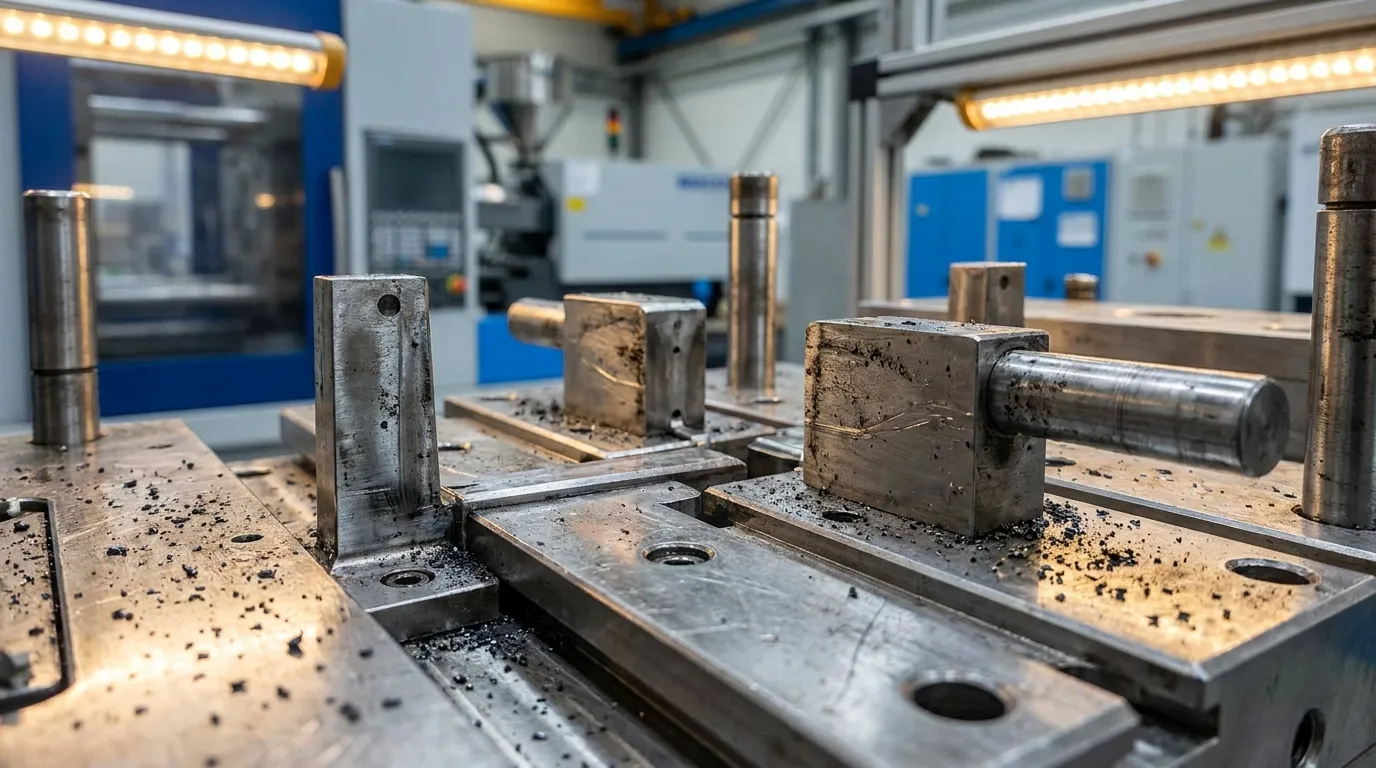
Wear resistance in mold components depends on controlling abrasion, Reibung, and surface fatigue. Glasgefüllte Harze, Schlechte Schmierung, and repeated cycling accelerate wear on cores, Karies, Auswurfstifte, and sliding components.
Most mold wear comes from repeated friction between steel surfaces and abrasive plastic flow. Filled engineering plastics are especially damaging because glass fibers and mineral additives scrape the mold surface during every injection cycle. Im Laufe der Zeit, this removes material from gates, Farben, and shutoff surfaces.
Laut Forschung, zusammengefasst von ScienceDirect, wear resistance is affected by hardness, Stärke, surface roughness, and material structure. In mold tooling, those properties work together rather than independently.
Abrasiv vs. Klebstoffverschleiß in Formen
Abrasive wear happens when hard particles cut into the mold surface. This is common with glass-filled nylon, flame-retardant compounds, and mineral-filled resins. Gate inserts and runner transitions usually show the first signs of damage.
Adhesive wear happens when two metal surfaces rub against each other under pressure. Slides, Lifter, and ejector systems are common failure points. If lubrication is poor, the surfaces may begin galling, which creates scratches, drag marks, and dimensional drift.
| Verschleißtyp | Gemeinsame Ursache | Typische Schimmelbereiche |
|---|---|---|
| Abrasiver Verschleiß | Glasgefüllte Harze | Tore, Karies, Farben |
| Haftverschleiß | Gleitmetallkontakt | Slides, Lifter, Ejektoren |
| Oberflächenermüdung | Wiederholtes Radfahren | Shutoffs, moving inserts |
| Korrosive Abnutzung | Aggressive additives | Vent areas, Karies |
Is hardness the same as wear resistance?
Hardness improves resistance to indentation, but wear resistance depends on toughness, Oberflächenzustand, lubrication, and coating performance. Extremely hard mold steels can still fail if brittleness increases.
Hardness and wear resistance are closely related, but they are not identical properties. A harder steel usually resists scratching and abrasive damage better than a softer steel. Trotzdem, extremely high hardness can reduce toughness and increase cracking risk under impact or cyclic stress.
Forschung, diskutiert von SilcoTek explains that wear performance depends on the entire surface system. Material structure, friction conditions, Beschichtungen, and operating loads all affect long-term durability.
This matters in mold manufacturing because the hardest steel is not always the safest choice. A high-impact mold with moving slides may perform better with slightly lower hardness and better toughness. That tradeoff often reduces unexpected downtime and expensive repairs.
For molds that require advanced thermal processing, a detailed overview of Schimmelwärmebehandlung can help clarify how hardness targets affect mold performance.
| Eigentum | Was es verbessert | Potenzielles Risiko |
|---|---|---|
| Hohe Härte | Abriebfestigkeit | Sprödigkeit |
| Hohe Zähigkeit | Rissbeständigkeit | Schnellerer Verschleiß |
| Oberflächenbeschichtung | Reduzierte Reibung | Beschichtungsversagen, wenn das Substrat schwach ist |
Which mold components experience the most wear?
Gate areas, Auswurfstifte, slides, and core features typically wear fastest because they experience concentrated friction, Druck, and repeated resin flow. Abrasive fillers like glass fiber increase damage significantly.
Not every mold component wears at the same rate. High-contact and high-flow areas usually fail first, especially in molds running abrasive engineering plastics. Concentrated pressure and repeated motion accelerate material loss over time.
The following components typically require the highest wear resistance:
- Gate-Einsätze, die einem schnellen Harzfluss ausgesetzt sind
- Auswurfstifte mit wiederholter Gleitbewegung
- Kernstifte für dünnwandige Geometrie
- Schieber und Lifter unter seitlich wirkendem Druck
- Hohlräume beim Gießen von glasgefüllten Materialien
A mold producing glass-filled nylon electrical connectors may show gate wear after only 250,000 cycles if the tooling steel is untreated. In vielen Fällen, nitrided H13 steel lasts significantly longer than untreated H13 under the same production conditions.
For a broader overview of mold architecture and tooling functions, die Formkomponentenleitfaden explains how these parts interact during injection molding cycles.
Which mold steels offer the best wear resistance?
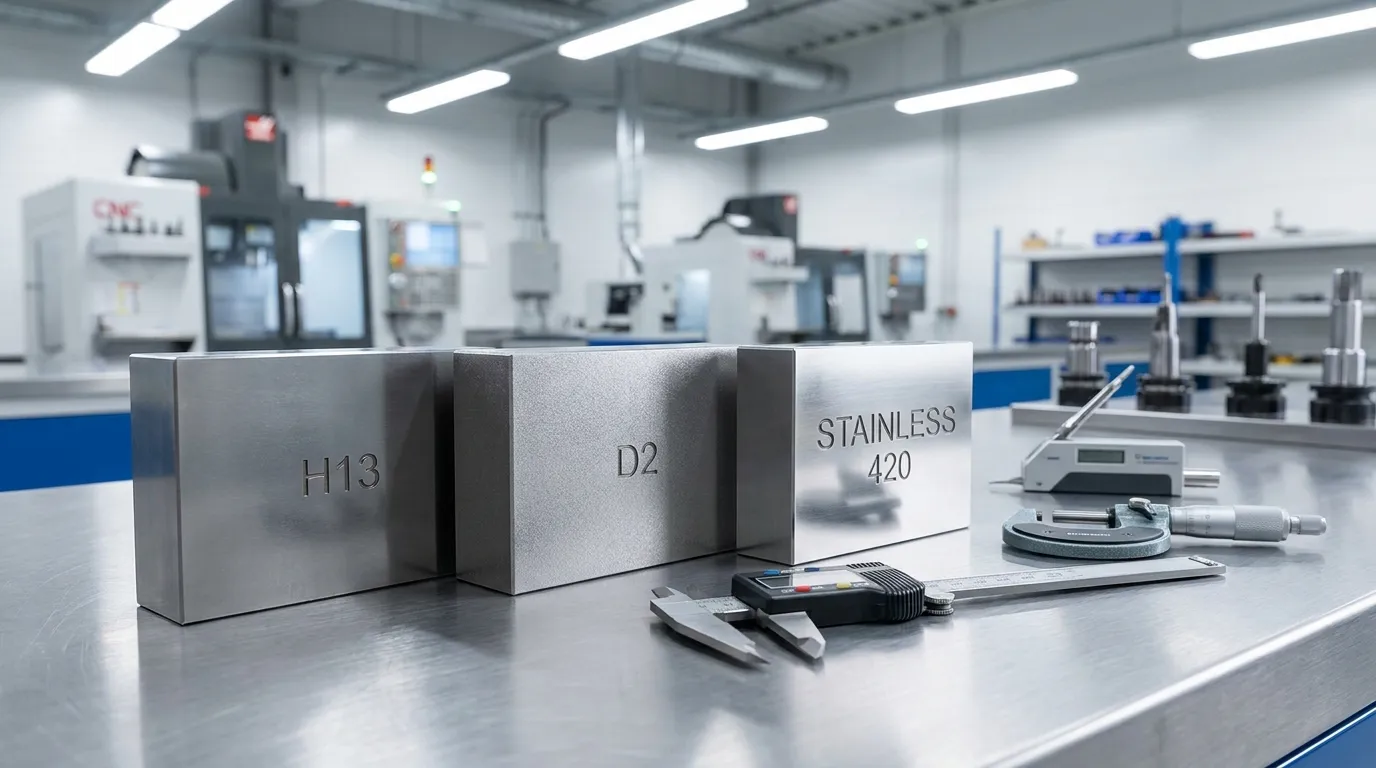
High-wear molding applications often use hardened tool steels like H13, D2, and powder metallurgy grades. The best choice depends on resin abrasiveness, Korrosionsexposition, polish requirements, and expected cycle count.
Tool steel selection affects both mold life and maintenance cost. Different steels perform better under different molding conditions, especially when abrasive or corrosive plastics are involved.
H13 is one of the most common mold steels because it balances hardness, Zähigkeit, and machinability. D2 offers higher abrasion resistance but can become brittle in impact-heavy applications. Stainless grades like S136 improve corrosion resistance, though some stainless steels have lower wear performance than hardened tool steels.
Forschung von Stainihard notes that many austenitic stainless steels prioritize corrosion resistance over abrasion resistance. That distinction matters in molds running aggressive fillers or high-cycle production.
Wahl von Stahl für glasgefüllte Kunststoffe
Glass-filled materials create extreme abrasive wear near gates and thin flow channels. Standard pre-hardened steels often wear too quickly in these environments. Powder metallurgy steels or nitrided H13 are more common choices for long production runs.
A cosmetic housing mold creates another tradeoff. Extremely hard tooling may improve wear life, but it can also complicate polishing and surface finishing. In diesen Fällen, balanced hardness and polishability are usually safer than maximum hardness.
| Stahlqualität | Stärken | Einschränkungen | Beste Nutzung |
|---|---|---|---|
| H13 | Zähigkeit und Wärmestabilität | Mäßige Abnutzungsbeständigkeit | Formen in der allgemeinen Produktion |
| D2 | Hohe Abriebfestigkeit | Geringere Zähigkeit | Schleifharze |
| S136 | Korrosionsbeständigkeit | Geringerer Verschleiß als bei manchen Werkzeugstählen | Medizinische und kosmetische Formen |
| CPM-Stähle | Hervorragende Verschleißleistung | Höhere Kosten | Hochvolumen-Abrasivguss |
For readers comparing broader tooling systems, die Grundlagen der Kunststoffform page explains how mold design choices affect long-term production performance.
How do coatings improve mold wear resistance?
Surface coatings improve mold wear resistance by reducing friction, surface fatigue, and abrasive damage. Coatings work best when matched with the correct substrate hardness and molding application.
Coatings protect the mold surface rather than changing the entire steel structure. They are commonly used in high-cycle molds where sliding friction or abrasive resin flow causes premature wear.
Physical vapor deposition (PVD) coatings create thin, hard surface layers that reduce friction and improve abrasion resistance. Diamantähnlicher Kohlenstoff (DLC) coatings are often used on sliding components because they reduce galling and sticking. Nitriding improves surface hardness by diffusing nitrogen into the steel surface.
Laut den von Verschleiß veröffentlichten Richtlinien zum Verschleißtest TWI Global, pin-on-disc testing is commonly used to evaluate coating wear performance under friction conditions.
Wenn Beschichtungen vorzeitig versagen
Coatings are not a substitute for poor steel selection. A premium coating applied to weak substrate material often fails faster than properly hardened tool steel without coating. Surface preparation and heat treatment quality still matter.
A high-volume automotive mold may use coated slides to reduce galling and maintenance downtime. If the base steel lacks sufficient hardness, the coating can crack or delaminate under repeated pressure.
| Beschichtungstyp | Hauptvorteil | Häufige Anwendungen |
|---|---|---|
| PVD-Beschichtung | Reduzierte Abschlüsse | Tore, Farben |
| DLC-Beschichtung | Geringere Reibung | Slides, Ejektoren |
| Nitritern | Oberflächenhärtung | Allgemeine Formwerkzeuge |
| Verchromung | Korrosionsschutz | Ausgewählte Hohlraumflächen |
Formen, die kosmetische Oberflächen benötigen, kombinieren oft Beschichtungen mit spezialisierten Beschichtungen Oberflächenbehandlungsoptionen to maintain appearance quality and reduce polishing frequency.
Which heat treatments improve wear resistance in mold tooling?
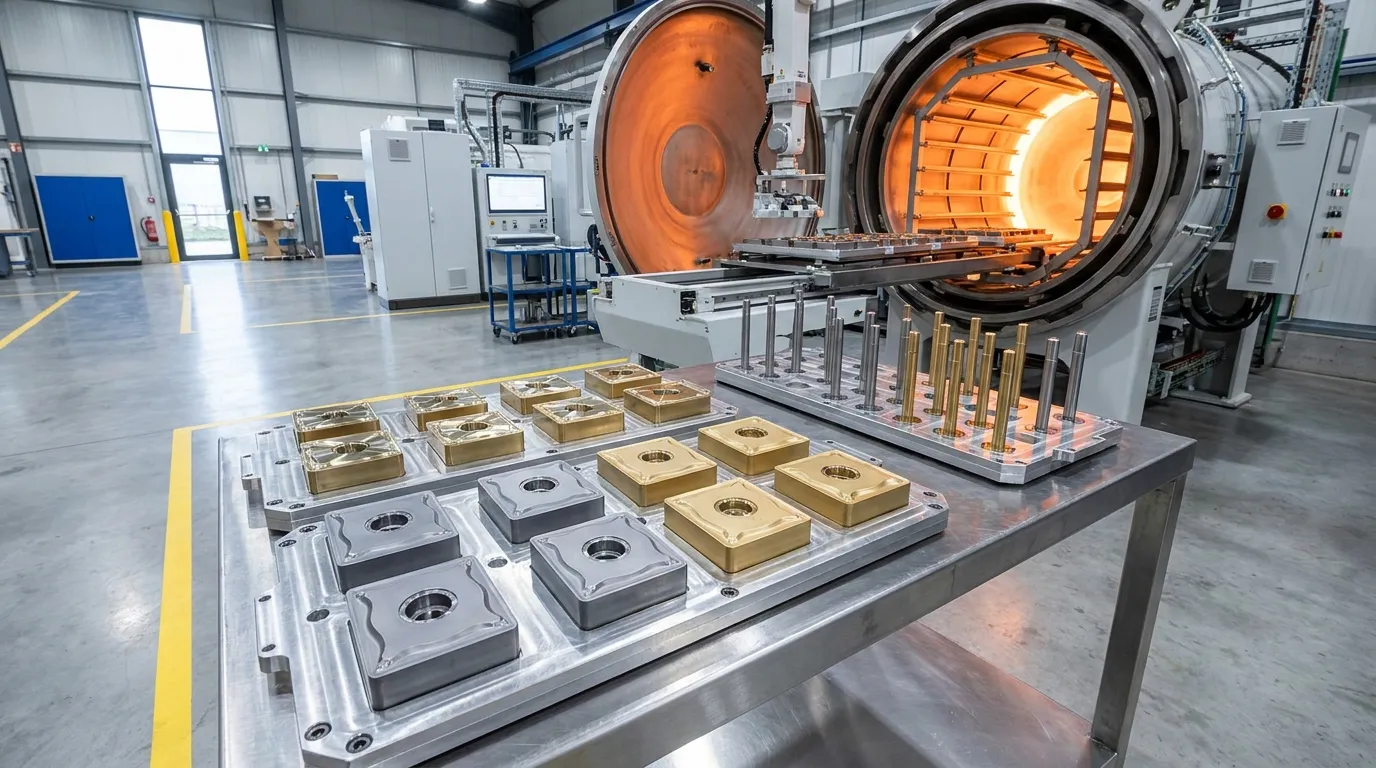
Heat treatment improves mold wear resistance by increasing surface hardness and stabilizing the steel structure. The wrong process can also increase brittleness, Verzerrung, or cracking risk.
Heat treatment changes the internal structure of the steel. In mold manufacturing, this process affects hardness, Zähigkeit, Dimensionsstabilität, und langfristige Haltbarkeit.
Vacuum hardening is commonly used because it limits oxidation and supports consistent hardness throughout the mold component. Tempering follows hardening and helps reduce brittleness by relieving internal stress. Case hardening and nitriding improve surface hardness without fully hardening the entire part.
Warum Nitritern in Spritzgussformen üblich ist
Nitriding creates a hard outer layer while maintaining a tougher core underneath. That balance works well for slides, ejector systems, and components exposed to repeated friction. It also reduces distortion risk compared to some deeper hardening processes.
A mold running mineral-filled flame-retardant resin may experience rapid ejector pin wear. In vielen Fällen, nitrided ejector systems extend maintenance intervals and reduce galling problems.
| Wärmebehandlung | Hauptvorteil | Gemeinsames Risiko |
|---|---|---|
| Vakuumhärtung | Gleichmäßige Härte | Verzerrung bei unkontrollierter Kontrolle |
| Härten | Stressabbau | Reduzierte Härte, wenn sie zu hoch ist |
| Nitritern | Oberflächenverschleißfestigkeit | Begrenzte Tiefe |
| Aufeiferhärtung | Harte Außenfassade | Prozesskomplexität |
Eine ausführliche Erklärung von Wärmebehandlungsverfahren methods can help engineers match steel grades with suitable hardening strategies.
How do abrasive plastics reduce mold life?
Abrasive engineering plastics can rapidly damage mold surfaces, especially around gates and high-flow regions. Glass-filled resins often require upgraded steel grades, Beschichtungen, or nitrided surfaces.
Filled plastics behave differently from standard commodity resins. Glass fibers, flame retardants, and mineral additives increase friction against the mold surface during every injection cycle. High-flow regions typically show wear first.
Glass-filled nylon is one of the most common causes of premature mold wear. Gates lose dimensional accuracy, core surfaces become rougher, and flash begins appearing earlier in production runs.
| Harztyp | Verschleißrisiko | Typische Empfehlung |
|---|---|---|
| Standard PP | Niedrig | Vorgehärteter Stahl |
| Glasgefülltes Nylon | Hoch | Gehärteter oder nitrierter Stahl |
| Flammhemmende Verbindungen | Mittel bis hoch | Beschichtete Werkzeuge |
| Mineralhaltiges Harz | Hoch | Verschleißfeste Einsätze |
A low-volume prototype mold may avoid expensive coatings because production volume does not justify premium treatment costs. High-volume production molds usually benefit from stronger wear protection because maintenance downtime becomes far more expensive over time.
Processing temperatures, Einspritzdruck, and resin flow speed also influence wear behavior. Following proper Formungsrichtlinien can help reduce unnecessary tooling stress.
How do you choose the right wear-resistance strategy?
The best wear-resistance strategy balances tooling cost, production volume, Harz-Abrasivität, and maintenance downtime. Overengineering the mold can waste budget, while underengineering increases repair frequency.
There is no single material or coating that works for every mold. The correct choice depends on resin type, expected cycle count, Kosmetische Anforderungen, and budget limitations.
High-volume automotive tooling usually justifies premium steels and coatings because downtime costs are high. Prototype molds and short production runs often use lower-cost tooling strategies instead.
Entscheidungstabelle für den Verschleiß der Form
| Produktionsszenario | Empfohlener Stahl | Beschichtung oder Behandlung | Wartungsrisiko |
|---|---|---|---|
| Prototyp mit geringem Volumen | Vorgehärteter Stahl | Minimale Behandlung | Moderat |
| Kosmetischer Gehäuseschimmel | S136 | Lichtnitriterung | Niedrig bis mäßig |
| Glasgefüllte Nylonform | H13- oder CPM-Stahl | Nitriering oder PVD | Niedrig |
| Hochgeschwindigkeits-Automobilform | D2- oder CPM-Stahl | DLC oder PVD | Sehr niedrig |
| Mineralhaltige Harzform | Gehärteter Werkzeugstahl | Nitritern | Mäßig bis niedrig |
A mold producing abrasive parts around the clock may recover coating costs quickly through reduced maintenance. Andererseits, a short-run mold may never recover that added expense.
Leser, die den ROI von Tools bewerten, können sich breiter vergleichen Werkzeugkostenanalyse factors when deciding how much wear protection makes financial sense.
What maintenance signs indicate poor wear resistance?
Poor wear resistance usually appears gradually before major tooling failure occurs. Early warning signs include flash, Dimensionsdrift, polishing frequency increases, and rough surface finishes.
Slides and ejector systems may begin sticking or galling. Gates can lose edge definition, especially in molds processing abrasive fillers. Surface scratches and drag marks often appear before more serious dimensional issues develop.
Checkliste zur Fehlersuche bei Verschleißfehlern
| Symptom | Hinreichender Verdacht | Empfohlene Lösung | Dringlichkeit |
|---|---|---|---|
| Blitz beim Abschalten | Oberflächenverschleiß | Überarbeitung oder härterer Einsatz | Hoch |
| Galling auf Rutschen | Schlechte Schmierung oder Beschichtungsversagen | Neubeschichtung oder Nitritern | Medium |
| Häufiges Polieren | Abrasivharzverschleiß | Aufwertung von Stahl oder Beschichtung | Medium |
| Raue Hohlraumoberfläche | Oberflächenermüdung | Oberflächenbehandlungsübersicht | Medium |
| Auswurfstift klemmt | Haftverschleiß | Härtere Oberflächenbehandlung | Hoch |
Preventive maintenance matters as much as material selection. Even premium tooling can wear prematurely if lubrication, Kühlung, or processing conditions are poorly controlled.
Den nächsten Schritt richtig machen
Choosing the right wear resistance strategy starts with understanding the molding environment. Harz-Abrasivität, production volume, Anforderungen an die Oberflächenoberfläche, and maintenance expectations all affect tooling decisions.
Many mold failures come from mismatched material choices rather than poor manufacturing. Harder steel is not always better, and coatings are not magic fixes for weak substrates. The most reliable molds use balanced engineering decisions across steel selection, Wärmebehandlung, and surface protection.
If your mold is already showing gate wear, Ärger, oder dimensionale Drift, reviewing the tooling material and treatment process is usually the best place to start.
Häufig gestellte Fragen
What is wear resistance in mold components?
Wear resistance is the ability of a mold component to resist material loss caused by friction, abrasion, and repeated molding cycles. Better wear resistance helps molds maintain dimensional accuracy and surface quality during longer production runs.
Does higher hardness always improve wear resistance?
Nein. Higher hardness can improve abrasion resistance, but excessive hardness may reduce toughness and increase cracking risk. Mold performance depends on balancing hardness, Zähigkeit, Beschichtungen, und Betriebsbedingungen.
Which mold steel is best for glass-filled plastics?
Hardened tool steels such as H13, D2, and some powder metallurgy grades are commonly used for abrasive glass-filled materials. The best option depends on corrosion exposure, polish requirements, und erwartetes Produktionsvolumen.
How do coatings improve mold life?
Coatings reduce friction, surface fatigue, and abrasive wear on mold surfaces. Properly matched coatings can extend maintenance intervals and reduce premature wear in high-cycle molding applications.
What causes rapid wear in injection molds?
Schleifharze, Schlechte Schmierung, sliding friction, and high production cycles are common causes of rapid mold wear. Glass fibers and mineral fillers are especially damaging to gates, Farben, and sliding surfaces.
Is nitriding good for mold components?
Ja. Nitriding improves surface hardness and wear resistance while maintaining core toughness. It is commonly used for slides, ejector systems, and tooling exposed to repetitive friction.
Freigeben:



Geschrieben von Sunshine
Bei Sunshine, Wir sind ein professioneller Hersteller und Lieferant von Präzisionsformkomponenten, bietet ein breites Produktsortiment für Stange- und Spritzgussanwendungen. Unser Kernfokus liegt auf dem Stanzen von Stempeln, Auswurfstifte und -hülsen, sowie Führungspfosten und Buchsen. Mit fortschrittlicher CNC-Bearbeitung, Strenge Qualitätskontrolle, und starke Produktionskapazitäten, Wir sorgen für Zuverlässigkeit, Hochpräzisionsteile, zusammen mit vorrätigen Standardkomponenten für schnelle und effiziente weltweite Versorgung.
NACHRICHTEN
EMPFANG SERVICE
Mit hochwertigen Teilen für jedes Budget und freundlichem Personal, das geschult ist, um Ihren Besuch informativ und unkompliziert zu gestalten.
