



Stanzwerkzeuge: Typen, Materialien, Toleranzen, und Einkaufsleitfaden
Punching dies are precision tooling systems used for cutting, shaping, and forming sheet materials in industrial manufacturing. Buyers should compare die types, tool steel vs carbide materials, tolerance capability, clearance control, supplier machining standards, and logistics readiness before ordering. The best punching die setup depends on production volume, material hardness, required accuracy, Wartungserwartungen, and supplier quality control.
Choosing the wrong die setup can increase scrap rates, shorten tool life, and delay production schedules. Buyers also face pressure to balance cost, precision, and lead time, especially when sourcing custom tooling from overseas suppliers. This guide explains how punching dies work, Welche Materialien schneiden am besten ab, how tolerances affect quality, and what to check before placing an order.
What are punching dies and how do they work?
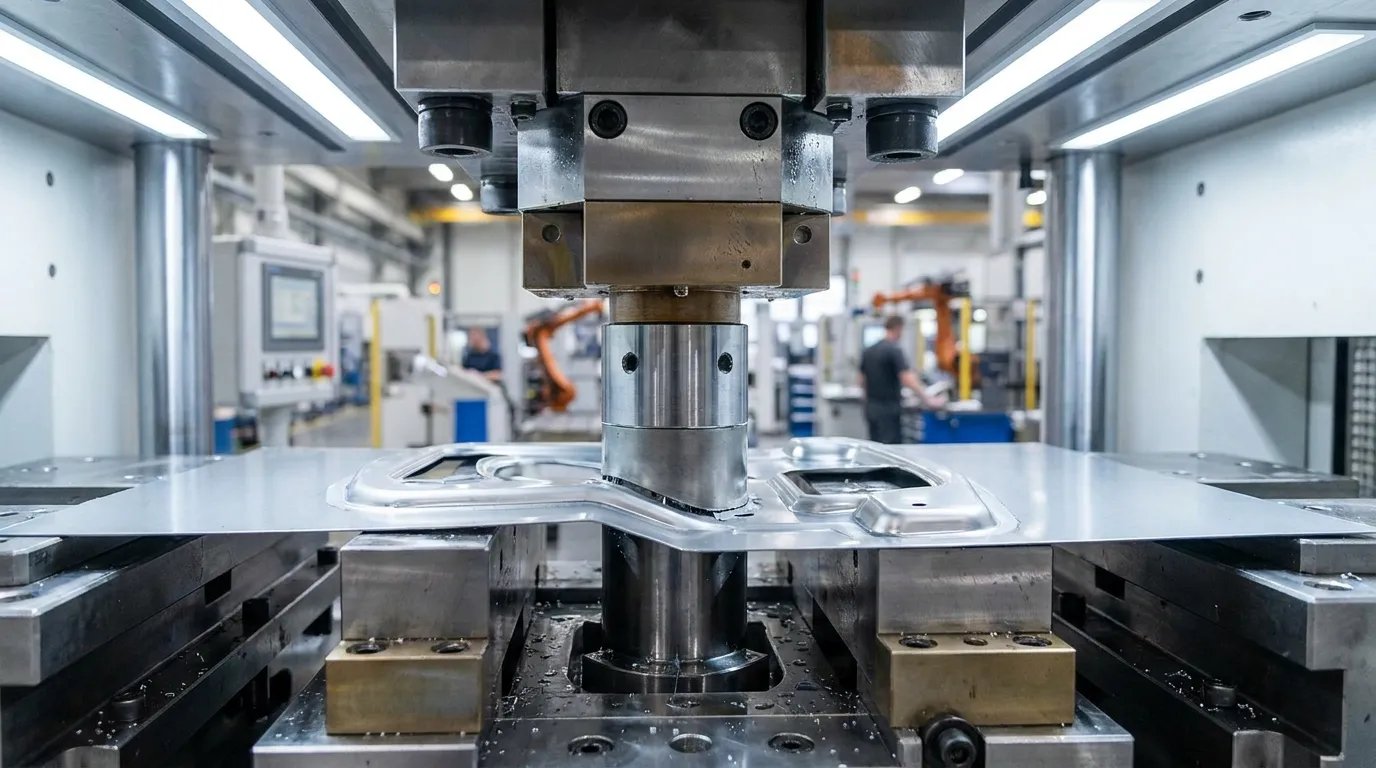
Punching dies are tooling systems used to cut, Form, or form material through controlled force and precision alignment. The punch applies pressure while the die receives and shapes the material, allowing consistent high-volume production in stamping and forming operations.
A punching die system includes two core components: the punch and the die. The punch presses into the material, while the die supports the material and controls the final shape. This process is common in sheet metal stamping, Herstellung von Automobilteilen, Elektronikproduktion, and appliance components.
The accuracy of the tooling directly affects edge quality, burr formation, and repeatability. Even small alignment issues can create uneven cuts or excessive wear. That’s why manufacturers focus heavily on machining precision, Wärmebehandlung, and clearance control during production.
Käufer, die einen umfassenderen Überblick über industrielle Werkzeugsysteme benötigen, können dies prüfen Leitfaden für Formkomponenten neben den Werkzeuggrundlagen, die in erklärt werden Grundlagen von Chipkomponenten.
Die Branchenterminologie rund um Stempel und Stempel wird klar erklärt durch MISUMIs Leitfaden für Punch-and-Die-Terminologie.
Which types of punching dies are used in manufacturing?
Progressive dies support high-volume automated production, while compound dies combine multiple cutting operations in one stroke. The best choice depends on production speed, Komplexität, material thickness, und erforderliche Präzision.
Different punching die designs are built for different manufacturing goals. A low-volume fabrication shop may prioritize lower tooling cost and easier maintenance. A high-speed automotive supplier usually focuses on cycle time, Konsistenz, und Verschleißfestigkeit.
| Die Type | Beste Nutzung | Hauptvorteil | Begrenzung |
|---|---|---|---|
| Progressive Die | Großserienproduktion | Schnelle automatisierte Verarbeitung | Höhere Werkzeugkomplexität |
| Compound-Stempel | Mehrfache Schneidarbeiten | Hohe Präzision in einem Schlag | Weniger flexibel für Komplexformung |
| Blank-Die-Würfel | Flachteilschnitt | Saubere Blank-Produktion | Begrenzte Umformungsfähigkeit |
| Formwerkzeug | Biegen und formen | Griffe bilden Komponenten | Mehr Setup-Variation |
Progressive vs. Verbundstanzformen
Progressive dies move material through several stations in sequence. Each station performs a separate operation, which improves production speed for large manufacturing runs. These dies are common in automotive and electronics manufacturing.
Compound dies perform multiple cutting operations at the same station during one press stroke. They’re often used when part accuracy matters more than production speed. Laut MISUMIs Compound-Chip-Referenz, compound tooling structures are commonly paired with hardened tool steels such as SKD11.
For buyers comparing broader tooling categories, die tooling systems provides additional manufacturing context.
What materials are best for punching dies?
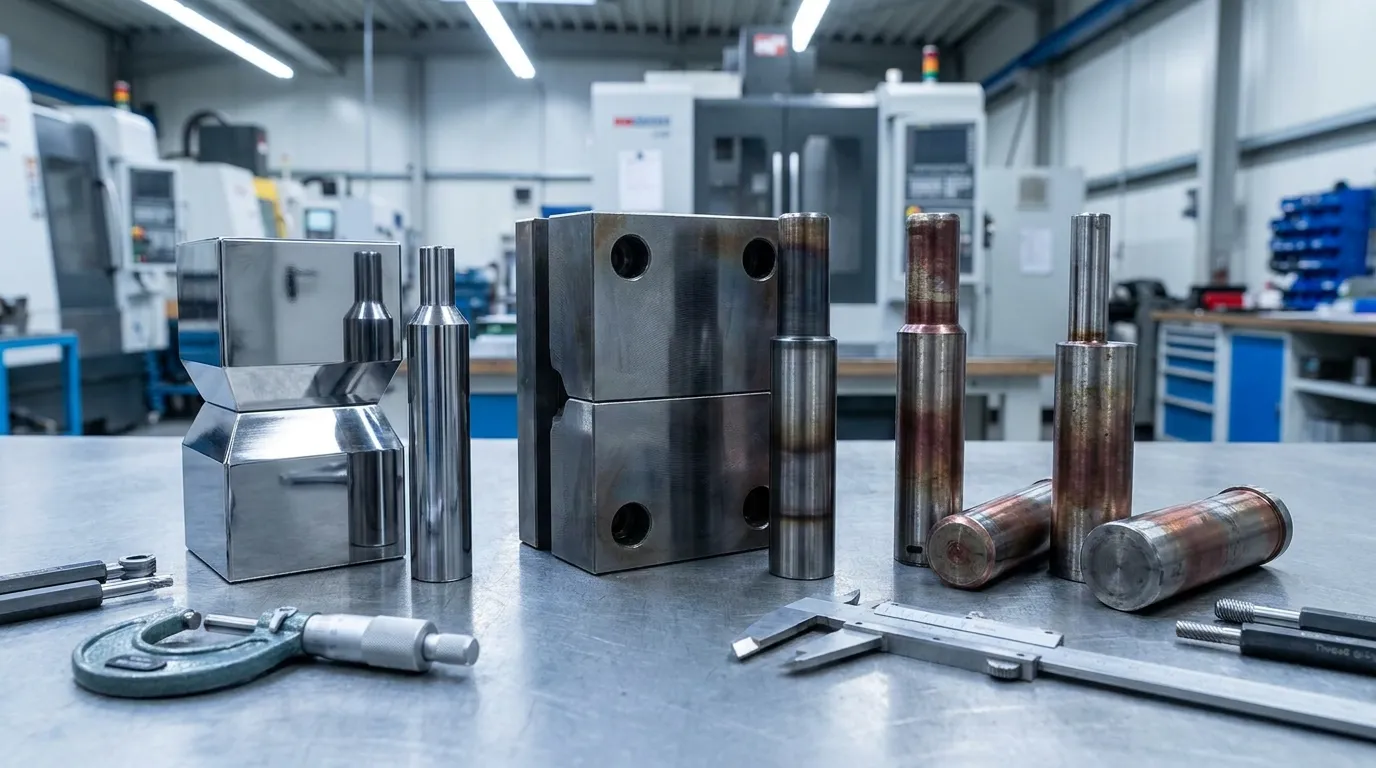
Tool steel punching dies balance durability and cost for many industrial applications, while carbide dies offer superior wear resistance for high-volume production. Material choice should match production cycles, sheet material hardness, und Wartungserwartungen.
Tool material affects wear resistance, sharpening frequency, edge quality, and overall operating cost. Buyers should match material selection to actual production conditions instead of assuming the hardest material is always the best choice.
Carbide punching dies are not always the best option. They last longer in high-volume production, but tool steel is often easier and cheaper to maintain for shorter production runs or moderate workloads.
Auswahltabelle für Stanzmatrizen
| Material | Verschleißfestigkeit | Kostenniveau | Bestes Produktionsvolumen | Wartungsfrequenz |
|---|---|---|---|---|
| D2 Werkzeugstahl | Mittel-hoch | Medium | Mittelvolumige Läufe | Moderat |
| SKD11 | Hoch | Mittel-hoch | Präzisionsstanzen | Moderat |
| Karbid | Sehr hoch | Hoch | Großserienproduktion | Niedrig |
| Hochgeschwindigkeitsstahl | Medium | Medium | Allgemeine industrielle Nutzung | Moderat |
A factory producing thin stainless steel brackets for automotive use may benefit from carbide tooling because downtime costs are high. In contrast, a smaller fabrication company producing limited batches may save money with tool steel dies that are easier to sharpen and replace.
Wenn Hartmetall den höheren Preis wert ist
Carbide becomes more practical when production volumes are high and materials are abrasive. It performs well with stainless steel, electrical steel, and other harder materials that increase wear rates.
Extremely tight tolerance claims are not automatically better. Over-specifying tolerances can raise tooling costs without improving production quality. Buyers should request tolerances that match the actual application and production environment.
Hersteller, die Werkzeugmaterialien und -komponenten vergleichen, können sie ebenfalls überprüfen Präzisionswerkzeugmaterialien for additional component references.
Why do punch and die tolerances matter?
Punch and die tolerances directly affect cut quality, burr formation, tool wear, und Produktionskonsistenz. Proper clearance helps maintain cleaner edges and longer tooling life while reducing scrap and maintenance costs.
Tolerance control determines how accurately the punch and die interact during production. Poor clearance settings can create rough edges, excessive burrs, or premature chipping. Im Laufe der Zeit, these issues increase scrap rates and maintenance costs.
Punch and die clearance refers to the gap between the cutting edges during operation. Laut MISUMIs Freigabe-Leitfaden, proper clearance improves cutting performance and extends tooling life.
What is punch and die clearance?
Clearance settings vary based on material thickness and hardness. Thin aluminum sheets need different clearance than thick stainless steel plates. Buyers should confirm that suppliers understand the target material before approving production drawings.
A practical example is burr reduction in thin sheet production. One manufacturer reduced secondary finishing work after adjusting clearance for thinner stainless steel stock. Cleaner edges reduced polishing time and improved consistency across production batches.
Checkliste für Toleranz und Qualität
- Überprüfen Sie die Materialdicke, bevor Sie den Abstand festlegen
- Anpassung der Toleranzgrenzen an die tatsächlichen Anwendungsanforderungen
- Überprüfung der EDM- und CNC-Bearbeitungsfähigkeit
- Fordern Sie Inspektionsberichte für kritische Maße an
- Überprüfen Sie die Schärf- und Wartungsverfahren
Maintenance planning also matters because worn tooling can slowly change clearance values over time. Buyers sourcing long-term replacement components can review Ersatzwerkzeugteile for ongoing tooling support.
How do you choose the right punching die supplier?
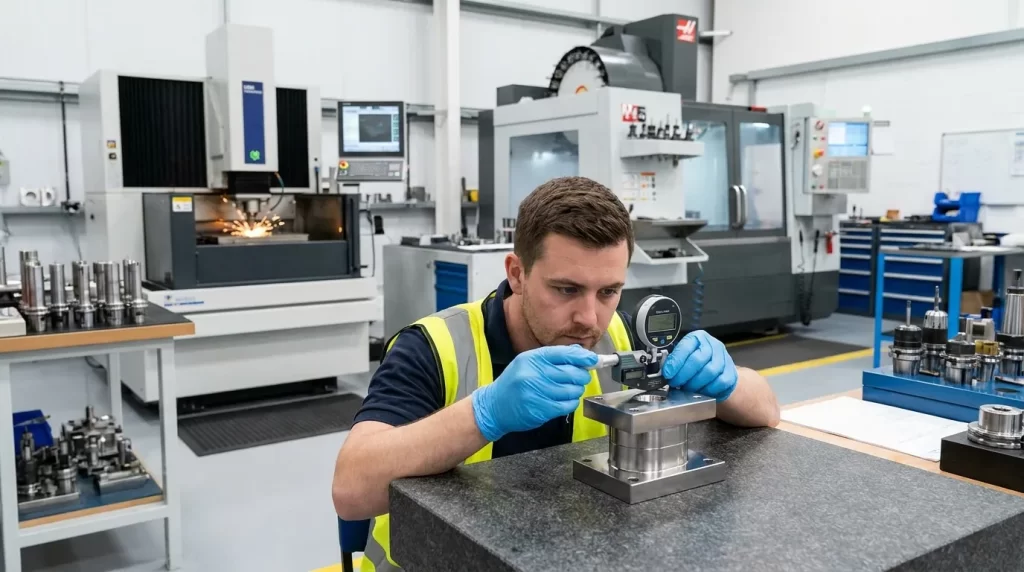
A reliable punching die supplier should provide verified material specifications, machining capabilities, tolerance controls, and quality inspection procedures. Buyers should also confirm lead times, production capacity, and experience with similar applications.
Supplier selection affects more than price. Weak machining standards or inconsistent inspection procedures can increase scrap, Ausfallzeit, and replacement costs long after delivery.
The cheapest overseas punching die supplier can create higher long-term costs if documentation, clearance control, or quality inspection standards are inconsistent. Buyers should compare supplier capability, not just quotation pricing.
Checkliste zur Bewertung von Lieferanten für Stanzmatrizen
| Bewertungsgebiet | Was bestätigt werden soll |
|---|---|
| CNC-Fähigkeit | Präzisionsbearbeitungskapazität |
| Draht-EDM-Funktionalität | Feinschneidgenauigkeit |
| Materialzertifizierung | Verifizierte Stahl- oder Hartmetallqualitäten |
| QC-Dokumentation | Inspektionsberichte und Toleranzen |
| Zuverlässigkeit der Vorlaufzeit | Realistische Produktionsplanung |
| Exportunterstützung | Verpackung und Versandkoordination |
A strong supplier should also understand the buyer’s industry requirements. An automotive stamping supplier may need different tolerances than an appliance manufacturer or electronics producer.
If you’re evaluating broader tooling manufacturing experience, Fachkompetenz in der Stanzenherstellung provides additional context about industrial die production capabilities.
What should buyers include in a punching die RFQ?
A detailed RFQ helps suppliers quote accurately and reduces production misunderstandings. Missing technical details often lead to delayed revisions, incorrect tolerances, or tooling redesigns after production begins.
An effective punching die RFQ should include:
- CAD-Zeichnungen oder 3D-Dateien
- Materialspezifikationen
- Erforderliche Toleranzen
- Produktionsvolumenschätzungen
- Erwartungen an die Oberflächenoberfläche
- Zielvorlaufzeit
- Pressmaschineninformationen, falls relevant
A common sourcing mistake happens when buyers provide drawings without tolerance details. One supplier may quote for standard machining tolerance, while another assumes ultra-precision requirements. That difference can change pricing and lead time significantly.
For projects involving custom tooling configurations, custom die solutions can help buyers compare available options before requesting quotations.
How can buyers reduce customs and shipping delays for punching dies?
Falsche HS-Codes, incomplete invoices, and missing compliance documents are common causes of customs delays for industrial tooling shipments. Buyers can reduce delays by confirming classification accuracy and documentation requirements before shipment.
International tooling shipments often move through multiple customs checks before delivery. Even accurate tooling production can become a problem if shipping paperwork is incomplete or incorrectly classified.
Laut FreightAmigos HS-Code-Referenz, industrial tooling classifications must match the actual product category and intended use. Documentation errors are also identified as a common cause of customs delays in EximAgents Zollverzögerungsleitfaden.
Checkliste zur Verhinderung von Zollverzögerungen
- Überprüfen Sie die HS-Code-Klassifizierung vor dem Versand
- Verwenden Sie detaillierte Produktbeschreibungen auf Rechnungen
- Beziehen Sie Dokumente über das Herkunftsland ein
- Bestätigen Sie, dass die Verpackung mit den Versanddokumenten übereinstimmt
- Überprüfen Sie die Importanforderungen mit Frachtpartnern
- Führen Sie Lieferanten- und Zollkommunikationsaufzeichnungen
One imported tooling shipment experienced delays because the invoice described the product only as “metal tooling.” Customs officers requested additional classification details, which delayed delivery and production scheduling. A more detailed invoice could have prevented the issue.
What maintenance practices extend punching die lifespan?
Regular maintenance reduces wear, Verbessert die Konsistenz, and protects tooling accuracy over time. Even high-quality dies lose performance when sharpening schedules and inspections are ignored.
A preventive maintenance approach usually costs less than replacing damaged tooling unexpectedly. Buyers should confirm that maintenance procedures are realistic for their production environment before selecting tooling materials.
Checkliste zur Wartung von Stanzenmatrizen
- Schneidschneiden Sie regelmäßig inspizieren
- Membranbildung während der Produktion überwachen
- Folgen Sie den geplanten Schärfintervallen
- Store tooling in dry, protected conditions
- Überprüfen Sie während der Wartung die Ausrichtung und den Spielraum
- Ersetzen Sie abgenutzte Führungskomponenten umgehend
A small production facility using tool steel dies may sharpen tooling more often but spend less on replacement costs overall. High-volume manufacturers often accept higher carbide tooling costs because fewer production stoppages offset the investment.
Hersteller, die langfristige Wartungspläne planen, können dies prüfen Werkzeugwartungsteile for replacement component support.
Den nächsten Schritt richtig machen
The best punching dies are the ones that match your production reality. Material hardness, Produktionsvolumen, Toleranzanforderungen, and supplier capability all affect long-term performance and operating cost.
Before placing an order, confirm machining standards, inspection procedures, material certification, and shipping documentation requirements. A lower upfront price does not always mean lower production cost over time.
If your team is comparing broader tooling systems or manufacturing applications, reviewing an Anwendungen im Spritzgussguss resource can also help connect punching die selection with larger production planning decisions.
Häufig gestellte Fragen
What is the difference between a punch and a die?
A punch applies force while the die shapes and supports the material. Both components work together to create accurate cuts, holes, or formed shapes during stamping and punching operations.
What materials are commonly used for punching dies?
Tool steel and carbide are the most common punching die materials. Tool steel balances durability and cost, while carbide performs better in high-volume or high-wear manufacturing environments.
What is punch and die clearance?
Punch and die clearance is the controlled gap between cutting components. Proper clearance improves edge quality, reduces burr formation, and helps extend tooling lifespan during production.
Which punching die type is best for high-volume production?
Progressive dies are widely used for high-volume production. They perform multiple operations in sequence, which improves speed, Konsistenz, and automation efficiency in large manufacturing runs.
What causes punching dies to wear out quickly?
Incorrect clearance and poor maintenance are major causes of punching die wear. Excessive production load, improper material selection, and delayed sharpening schedules can also shorten tooling lifespan.
What documents help avoid customs delays for industrial tooling?
Accurate shipping and classification documents help reduce customs delays. Commercial invoices, HS codes, and origin documentation should all match the actual tooling being imported.
Teilen:



Geschrieben von Sunshine
Bei Sunshine, Wir sind ein professioneller Hersteller und Lieferant von Präzisionsformkomponenten, bietet ein breites Produktsortiment für Stange- und Spritzgussanwendungen. Unser Kernfokus liegt auf dem Stanzen von Stempeln, Auswurfstifte und -hülsen, sowie Führungspfosten und Buchsen. Mit fortschrittlicher CNC-Bearbeitung, Strenge Qualitätskontrolle, und starke Produktionskapazitäten, Wir sorgen für Zuverlässigkeit, Hochpräzisionsteile, zusammen mit vorrätigen Standardkomponenten für schnelle und effiziente weltweite Versorgung.
NACHRICHTEN
EMPFANG SERVICE
Mit hochwertigen Teilen für jedes Budget und freundlichem Personal, das geschult ist, um Ihren Besuch informativ und unkompliziert zu gestalten.
