



Werkzeugformkomponenten: Auswahlleitfaden für langlebige Stanzwerkzeuge
Die mold components control stamping accuracy, Ausrichtungsstabilität, and tooling lifespan. Choosing the right guide posts, Buchsen, Schläge, and wear-resistant materials helps reduce downtime and improve repeatable production. Most early tooling failures come from poor alignment, incorrect material selection, or weak maintenance planning. Standard components work well for many production lines, while custom parts are better for specialized tolerances or high-load applications.
Stamping tools fail faster when components are mismatched to production conditions. A guide system with poor alignment can wear out punches early, while overly hard tooling materials may crack under repeated impact. Buyers need more than a parts catalog. They need a selection framework that balances durability, sourcing speed, Wartung, and repeatable performance.
What are die mold components and why do they affect stamping durability?
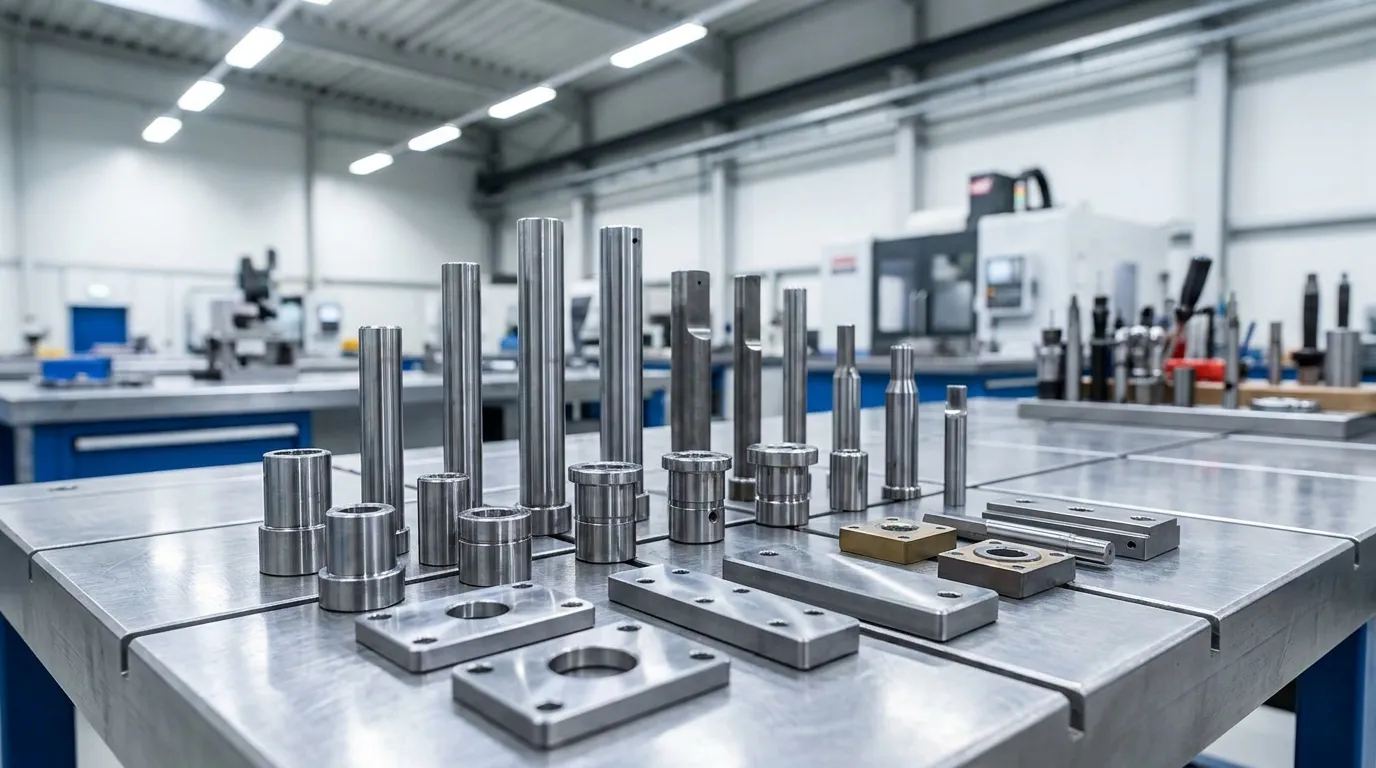
Die mold components directly affect stamping accuracy, Verschleißfestigkeit, and tooling lifespan. Führungssysteme, Schläge, and bushings must work together to maintain alignment and repeatable production under high-cycle operation.
Die mold components are the precision parts inside a stamping tool that guide movement, control alignment, and shape material during production. Common examples include punches, dies, Leitfäden, Buchsen, Ejektorsysteme, wear plates, and sleeves.
When one component wears unevenly, the entire tooling system can drift out of tolerance. That creates burrs, Dimensionsvariation, and unnecessary downtime. In high-cycle stamping lines, even small alignment errors become expensive over time.
Many buyers focus only on hardness or material grade. That approach misses a bigger issue. Long-term stamping performance depends on how well components work together under load, Geschwindigkeit, and repeated impact.
| Komponente | Hauptfunktion | Auswirkungen auf die Haltbarkeit |
|---|---|---|
| Schläge | Material formen oder schneiden | Hohe Verschleißbelastung |
| Leitfäden | Ausrichtung aufrechterhalten | Ungleichmäßigen Verschleiß verhindern |
| Buchsen | Reibung reduzieren | Verbesserung der Bewegungsstabilität |
| Verschleißplatten | Oberflächen schützen | Verlängerung der Werkzeuglebensdauer |
| Ejektorsysteme | Entfernen Sie gestanzte Teile | Produktionsunterbrechungen reduzieren |
For a broader overview of tooling structures and systems, Sieh dir das an Leitfaden für Formkomponenten und Erkundung des Zusammenhangs Chip-Komponentensysteme.
Which die mold components have the biggest impact on tool life?
Leitfäden, Buchsen, Schläge, and wear-resistant inserts typically determine tool lifespan more than secondary accessories. Poor alignment or inadequate hardness increases friction, Dimensionsdrift, and premature failure during repeated stamping cycles.
Guide systems usually have the biggest effect on long-term durability because they control movement accuracy. If alignment drifts even slightly, punches and dies begin wearing unevenly. That shortens service life and increases replacement frequency.
Punch material also matters, especially in high-volume stamping. Harder materials improve wear resistance, but higher hardness is not always better. Extremely hard punches can become brittle under repeated impact loads and may crack earlier than tougher materials with lower hardness.
A high-cycle automotive stamping line provides a good example. One manufacturer replaced guide bushings every two months because alignment tolerance was too loose. After tightening guide fit tolerances and improving lubrication control, the replacement cycle extended significantly without changing punch material.
| Komponente | Häufige Ursache des Scheiterns | Auswirkungen auf die Werkzeuglebensdauer |
|---|---|---|
| Leitfäden | Fehlstellung | Ungleichmäßiger Verschleiß |
| Buchsen | Reibung und Kontamination | Verringerte Genauigkeit |
| Schläge | Sprödigkeit oder Verschleiß | Knacken und Ausfallzeiten |
| Verschleißeinsätze | Oberflächenermüdung | Kürzere Wartungsintervalle |
| Quellen | Kompressionsermüdung | Inkonsistente Operation |
Käufer, die Toleranzen und Verschleißfestigkeit vergleichen, sollten diese ebenfalls überprüfen Präzisionsformkomponenten for tighter production requirements.
How do you choose guide posts and bushings for repeatable alignment?
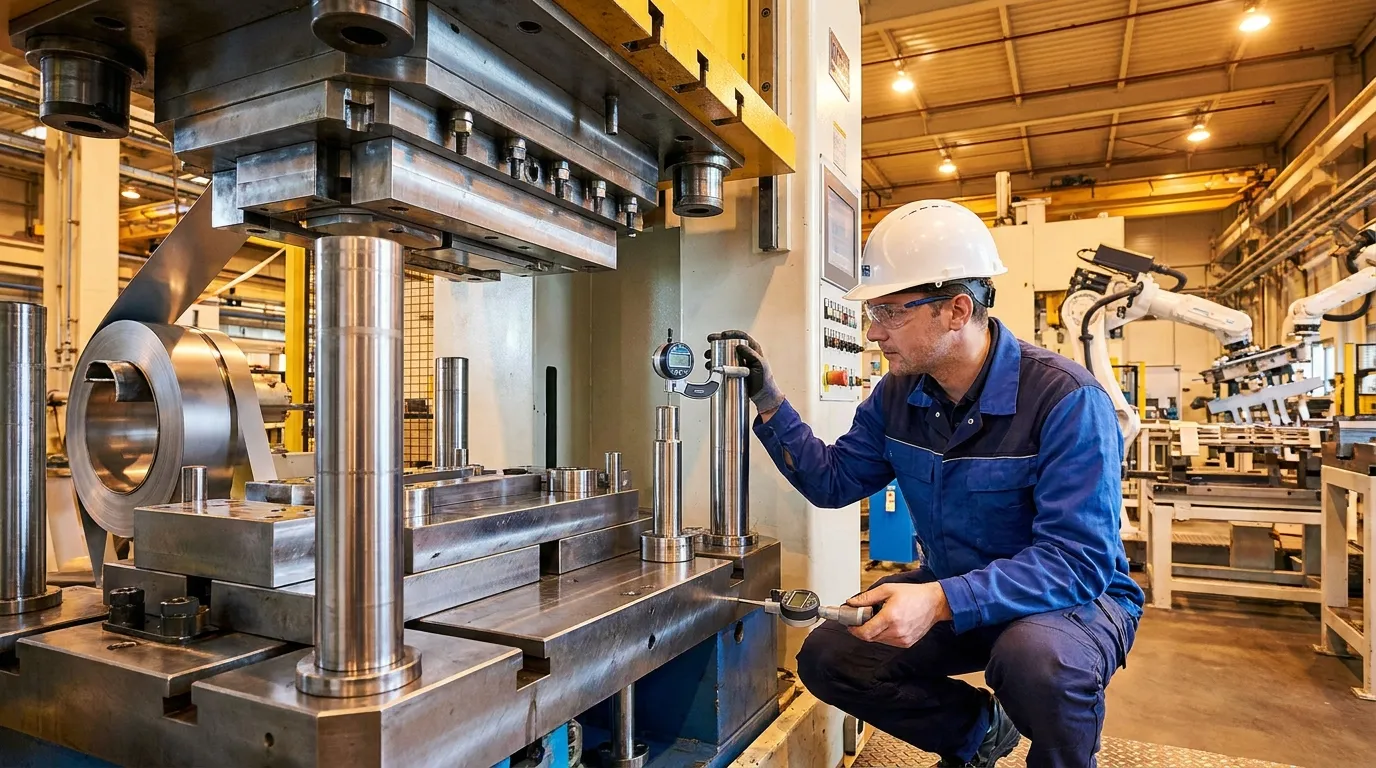
Guide posts and bushings should match production load, stamping speed, und Toleranzanforderungen. Tight alignment control reduces uneven wear, protects punches, and improves repeatable part accuracy over long production runs.
Guide systems should be selected based on operating conditions, not just catalog dimensions. High-speed stamping lines usually require tighter fit tolerances and smoother surface finishes to reduce friction and vibration.
Poor alignment creates a chain reaction. Bushings wear faster, punches shift slightly off-center, and stamped parts lose dimensional consistency. In severe cases, the die set can crack from uneven stress distribution.
Freiraum und Passfestigkeit
Tighter clearances improve alignment accuracy, but excessive tightness can increase friction and lubrication problems. The best balance depends on cycle speed, stamping load, and contamination exposure.
Standard guide systems often perform well for medium-volume production because replacement parts are easier to source. Fully custom systems are usually reserved for specialized tolerances or unusual tooling geometry.
| Produktionszustand | Empfohlener Ansatz |
|---|---|
| Mittelvolumen-Prägung | Standard-Führungssysteme |
| Hochgeschwindigkeitsproduktion | Präzisionspass-Buchsen |
| Schwere Aufpralllasten | Härtere Führungsmaterialien |
| Kontaminierte Umgebung | Verbessertes Schmiermitteldesign |
Material- und Oberflächenfinish-Auswahl
Surface finish affects wear more than many buyers expect. Rough surfaces increase friction and accelerate bushing wear, especially during long production runs.
A manufacturer that switched from fully custom guide systems to stocked standard assemblies reduced downtime because replacement inventory became easier to maintain. Faster replacement availability often matters more operationally than small precision gains.
For commonly stocked assemblies and replacement availability, Überprüfen Sie diese Führungssystemteile.
What materials work best for high-cycle stamping applications?
The best die mold component material depends on stamping force, Produktionsvolumen, und Verschleißbedingungen. Harder materials improve wear resistance, but excessive hardness can increase brittleness and shorten component life under impact loads.
Tool steel remains the most common material for punches, dies, and wear components because it balances hardness, Zähigkeit, and machining stability. Heat treatment also plays a major role. Two components made from the same steel can perform very differently after processing.
Many buyers assume maximum hardness guarantees maximum durability. Das stimmt nicht immer. A stamping operation using extremely hard punch materials experienced repeated cracking because the tooling absorbed heavy impact loads during each cycle.
Entscheidungstabelle zur Auswahl der Matrixkomponente
| Produktionsvolumen | Stanzlast | Empfohlener Materialfokus | Standard oder Custom |
|---|---|---|---|
| Niedriges Volumen | Licht | Allgemeiner Werkzeugstahl | Standard |
| Mittleres Volumen | Moderat | Wärmebehandelter Verschleißstahl | Standard |
| Hochvolumen | Schwer | Hohe Verschleißfestigkeit mit Zähigkeit | Individuelle Anpassungen, wenn nötig |
| Präzisionsstanzen | Moderat | Werkzeugstahl mit engen Toleranzen | Gepflogenheit |
| Stanzen von abrasivem Material | Schwer | Verbesserter verschleißsicherer Stahl | Gepflogenheit |
Heat treatment quality matters as much as material grade. Poor heat treatment creates inconsistent hardness, Oberflächenermüdung, and uneven wear patterns.
Replacement planning also affects material decisions. Some manufacturers choose slightly lower hardness materials because they are easier to machine, faster to replace, and less prone to cracking.
Käufer, die Wartungsbestände planen, können die verfügbaren Angebote vergleichen Ersatzformteile vor der finalen Spezifikation.
When should you use standard components instead of custom parts?
Standard die mold components reduce sourcing time and replacement delays for most applications. Custom parts become necessary when tolerance, Geometrie, or production load requirements exceed standard component limitations.
Standard components work well in many stamping operations because they simplify sourcing, Wartung, und Bestandsplanung. Replacement parts are easier to stock, and production downtime is usually shorter when failures occur.
Custom components make sense when production requirements exceed standard tolerances or when tooling geometry is highly specialized. Precision electronics stamping and complex automotive applications often fall into this category.
Custom die components are not automatically higher quality. Standard parts are often the safer operational choice when replacement speed matters more than extreme precision.
Standard- vs. benutzerdefinierte Auswahltabelle
| Lage | Bessere Wahl | Hauptgrund |
|---|---|---|
| Allgemeine Prägung | Standard | Faster sourcing |
| Häufige Ersatz | Standard | Einfachere Bestandsplanung |
| Anforderungen an extreme Toleranzen | Gepflogenheit | Präzisionsregelung |
| Spezialisierte Geometrie | Gepflogenheit | Bessere Passform |
| Globale Multi-Site-Produktion | Standard | Konsistente Verfügbarkeit |
Lead time is another factor. According to manufacturing timeline analysis from Ulitech-Ingenieurwesen, tooling revisions and component delays often extend production schedules more than buyers initially expect.
For common stocked options, compare available Standardgussteile.
Why do die mold components fail earlier than expected?
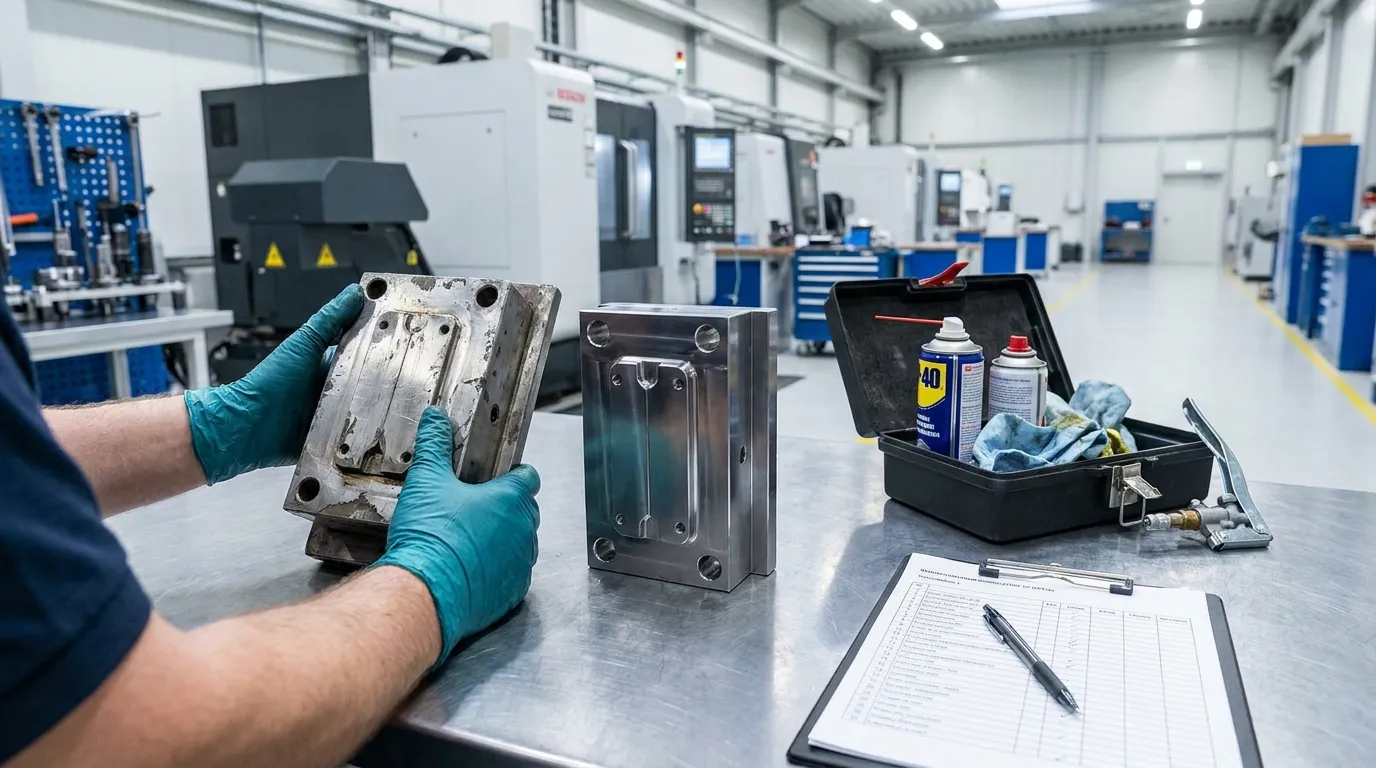
Most premature die component failures are caused by alignment problems, unzureichende Schmierung, Kontamination, or incorrect material selection. Preventive maintenance and proper fit tolerance usually extend tool life more effectively than simply choosing harder materials.
Misalignment is one of the biggest causes of premature wear. Even small guide system movement creates uneven loading across punches and bushings. Im Laufe der Zeit, that increases friction and dimensional drift.
Contamination is another common issue. Metal particles and debris can damage bushings quickly if lubrication systems are inconsistent or poorly maintained.
Checkliste zur Fehlersuche bei vorzeitigen Fehlern
| Symptom des Versagens | Wahrscheinliche Ursache | Inspektionsschritt | Empfohlene Lösung |
|---|---|---|---|
| Ungleichmäßiger Stempelverschleiß | Fehlstellung | Prüfe die Führungsfreigabe | Passungstoleranz anpassen |
| Buchs-Wertung | Schlechte Schmierung | Schmierfluss inspizieren | Verbessern Sie den Schmierplan |
| Stempelknacken | Übermäßige Härte | Überprüfen Sie die Materialspezifikationen | Erhöhen Sie die Zähigkeitsbalance |
| Oberflächenermüdung | Kontamination | Inspizieren Sie die Schmutzfreiheit | Verbesserung der Reinigungsroutine |
| Dimensionsdrift | Abgenutztes Führungssystem | Genauigkeit der Ausrichtung messen | Abgenutzte Führungen ersetzen |
Many tooling failures blamed on material quality actually start with maintenance problems. Regular inspection schedules usually prevent larger failures before production stops.
A preventive maintenance program that checks alignment, lubrication, and surface wear at fixed intervals often reduces replacement costs more effectively than upgrading every component material.
Operationen mit engen Toleranzen können diese überprüfen Hochpräzisionswerkzeugteile for improved alignment consistency.
How should buyers evaluate suppliers and lead times?
Supplier evaluation should focus on delivery consistency, Inventarunterstützung, Qualitätskontrolle, und Ersatzverfügbarkeit. A low component price means little if replacement delays stop production for weeks.
Global buyers also need to consider customs processing and shipping documentation. Import delays caused by incomplete paperwork can extend lead times significantly. Recent customs guidance from Zoll von Bangladesch und logistische Analyse aus EximAgent AI show that documentation errors remain a major cause of shipment delays.
Fragen, die Sie den Lieferanten stellen sollten
- Do they stock replacement inventory locally?
- Can they maintain consistent tolerances across batches?
- What is the average replacement lead time?
- Do they provide inspection reports?
- How do they handle urgent replacement requests?
One manufacturer experienced several weeks of downtime because replacement guide components were unavailable during a production spike. After switching to a supplier with stocked standard assemblies, the company reduced replacement delays and stabilized scheduling.
Supplier quality control also matters during production launch. Manufacturing analysis from HH Molds Inc. highlights how inspection planning affects tooling consistency and long-term production stability.
For broader sourcing considerations and tooling categories, Rezensiere dies Beschaffung von Werkzeugkomponenten.
What maintenance practices extend die mold component lifespan?
Regular inspection, Schmierregelung, and planned replacement schedules extend component lifespan more effectively than reactive repairs. Most long-term tooling problems develop gradually before major failures appear.
Maintenance teams should track wear patterns instead of waiting for visible damage. Small alignment shifts can create uneven punch loading long before production defects become obvious.
Empfohlene Wartungscheckliste
- Kontrollieren Sie die Ausrichtung der Führung in festgelegten Abständen
- Reinigen Sie regelmäßig Schmutz von beweglichen Oberflächen
- Schmierkonsistenz überwachen
- Ersetzen Sie abgenutzte Buchsen, bevor sich die Toleranzverschiebung ausbreitet
- Halten Sie Ersatzteile auf Lager bereit
- Erfassen Sie wiederkehrende Abnutzungsmuster für zukünftige Anpassungen
A scheduled inspection program helped one stamping operation reduce premature punch wear after identifying uneven guide loading early. The company avoided a larger die failure because technicians corrected alignment before cracks developed.
Pflege eines Backups Ersatzwerkzeugbestand also shortens recovery time when failures happen unexpectedly.
Den nächsten Schritt richtig machen
Choosing the right die mold components is about balancing precision, Haltbarkeit, sourcing speed, and maintenance practicality. Buyers who focus only on hardness or upfront cost often miss the operational factors that affect long-term tooling performance.
Start by evaluating alignment stability, Produktionsvolumen, replacement lead times, and maintenance requirements together. Standard components may provide the best long-term value for many stamping lines, especially when replacement speed matters. For tighter tolerances or specialized production demands, custom tooling can still be the better fit when managed carefully.
Häufig gestellte Fragen
What are die mold components?
Die mold components are the precision parts used inside stamping tools to guide movement, shape material, and maintain alignment during production. Common examples include punches, Leitfäden, Buchsen, Ejektorsysteme, and wear-resistant inserts.
What components affect stamping accuracy the most?
Leitfäden, Buchsen, and punches have the biggest effect on stamping accuracy because they control alignment and dimensional consistency. Worn or poorly matched components often cause uneven wear, Mahlscheiben, und dimensionale Drift.
What material is best for stamping dies?
The best material depends on production volume, Aufpralllast, und Verschleißbedingungen. Tool steels with proper heat treatment usually balance hardness, Zähigkeit, and wear resistance better than overly hardened materials.
When should custom die components be used?
Custom die components are best when standard parts cannot meet tolerance, Geometrie, or production-load requirements. They are commonly used in high-precision or specialized stamping applications.
Why do die components wear out early?
Most premature wear comes from misalignment, Schlechte Schmierung, Kontamination, or incorrect material selection. Preventive maintenance and accurate fit tolerances usually improve lifespan more than increasing hardness alone.
How do you improve mold life?
Mold life improves when components are properly aligned, regularly lubricated, and inspected before excessive wear develops. Scheduled replacement planning also reduces sudden production failures.
Teilen:



Geschrieben von Sunshine
Bei Sunshine, Wir sind ein professioneller Hersteller und Lieferant von Präzisionsformkomponenten, bietet ein breites Produktsortiment für Stange- und Spritzgussanwendungen. Unser Kernfokus liegt auf dem Stanzen von Stempeln, Auswurfstifte und -hülsen, sowie Führungspfosten und Buchsen. Mit fortschrittlicher CNC-Bearbeitung, Strenge Qualitätskontrolle, und starke Produktionskapazitäten, Wir sorgen für Zuverlässigkeit, Hochpräzisionsteile, zusammen mit vorrätigen Standardkomponenten für schnelle und effiziente weltweite Versorgung.
NACHRICHTEN
EMPFANG SERVICE
Mit hochwertigen Teilen für jedes Budget und freundlichem Personal, das geschult ist, um Ihren Besuch informativ und unkompliziert zu gestalten.
